Of course, but it's a cool word and it's being used in this context to indicate a specific kind of a memorial from a specific part of the world, which is what makes this post interesting. "Memorials" generically wouldn't make as interesting a topic.
Generic words are often adopted into other languages to carry a more specific meaning, though damned if I can think of an example right now.
I'm sure the title "What Are Spomeniks?" doesn't help because it's basically trolling everyone who speaks a Slavic language, but it's also kind of a cool-looking title and I'd be sad to change it. (How about this? Think of it as ostranenie: https://en.wikipedia.org/wiki/Defamiliarization)
The locally-used name here, "Spomeniks", more precisely groups and identifies these structures than the foreign word "Memorial" would. Calling them by another name would make it difficult to communicate usefully about them, while simultaneously stripping away a piece of their cultural heritage: their native-language name.
Additionally, as the article notes, Spomenik translates to Monument in english, not Memorial. They may be both "Spomeniks" and "Monuments", but the more precise name "Spomeniks" uniquely refers to them, while the less precise name "Monuments" refers to millions of other objects not associated with this Yugoslavian cultural effort as well. Prior argument applies.
For example, we call "Stonehenge" and "Moai" by their locally-used names. They may also be "Monuments", but they have more precise names available, which are widely used.
If you mentioned to another former Yugoslavian that you had drawn a picture of a spomenik, would it be implicitly clear that you meant one of these postwar memorials, or could they reasonably assume you meant, say, the statue of Bruce Lee in Mostar?
Croatian here. You're correct, if you only said the word "spomenik" to anybody from former Yugoslavia, they wouldn't be able to distinguish whether you're talking about precisely those monuments built after WW2, or any other monument built before or after the communist era. Or even, say, Washington monument (In Croatian it's literally called "Washingtonov spomenik"). The word "spomenik" means "a monument" and just that. I was actually surprised to learn that in English the word refers to monuments from a particular location and particular era.
Well, there are other examples - to me, Bohemians are my nation, to English people, "bohemian" describes behavior that used to be seen here (and way overblown in catholic-driven news sources at the time - Prague people were protestant) during the Middle Ages
As someone who at one time spoke fluent Bosnian/Croatian/Serbian, I can confirm that "spomenik" can be (and sometimes is!) translated as "memorial". Indeed, the root of the word is a verb that in its archaic sense can mean "to remember", as does the verbal root of "memorial". Furthermore, "spomenik" can also be translated as "monument".
So while the word often is used in the context of the WWII socialist memorials, the word in fact just means "monument" or "memorial". For example, here's an article using the term for a memorial to veterans ("defenders"), specifically those who died, from the 1991-1995 Croatian War for Independence: https://pakrackilist.hr/spomenik-hrvatskim-braniteljima-dovr...
I don't completely disagree with the author's idea to use the original term to add some local color, but it's not a special term, just one of the general terms used for memorials and monuments. A related term, "spomenica", is also frequently used, but I'm not sure about the nuances between these two terms.
"Spomenik" definitely means "monument" or "memorial". In a specific context, it also means "tombstone".
"Spomenica" is much less used. I'm a native speaker -- born and raised in Belgrade -- and I've only heard it in very specialized and rare occasions, so I'm having a hard time translating it correctly. In the context I've heard it used, it's an award or recognition, usually in the form of a scroll or a medal.
I like the authors use of the native word "spomenik" to talk about this specific style, but it's definitely just the author's artistic choice.
Spomenik comes from "spomen", which translates to "recalling /remembering someone dead or some event from the past". It's basically a memorial that should invoke the viewer to recall the events past and/or people who were involved.
While spomenik is used for all monuments around the world, when someone just says "spomenik" the first thing that comes to my mind are those post-WWII spomeniks - probably because there's so many of them.
I feel like monument isn't a right translation. Do you call Eiffel Tower a monument? If yes, I can tell you that Eiffel Tower is definitely not a spomenik. If that is the case, "memorial" is the proper translation for spomenik.
If there were hundreds or thousands of very closely related in time and purpose monuments all over England, there would be a more specific name to group those, too. Calling Spomeniki "monuments" is like calling a tractor a "vehicle" -- it's correct, but it's a loss of useful grouping information.
Huh! As i was pondering this after posting, war memorials were exactly the example i thought of.
It's an interesting comparison, because the simple meaning of the phrase is just a memorial to people who died in war. So, for example, the bomber command memorial [1] is, in that sense, a war memorial.
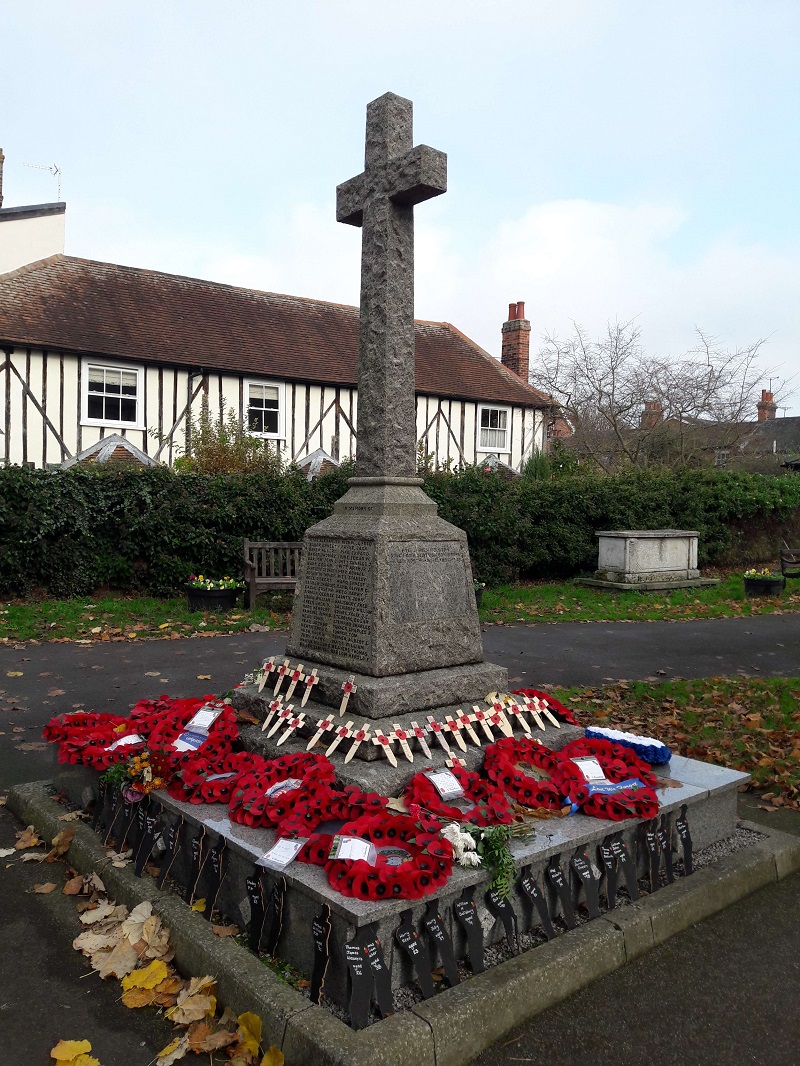
But if you say "war memorial" to a British person, it means something much more specific: a pillar, cross, or obelisk, about ten to twenty feet tall, located at a road junction near the centre of a village or small town, erected after the first or second world war:
Yeah - did wonder about that very precise meaning - there are quite a few other memorials to wars but they are usually qualified in some way "Korean War Memorial" or even for particular units in WW2 such as the superb Commando Memorial near Spean Bridge in the Highlands:
> the more precise name "Spomeniks" uniquely refers to them
This is wrong. As a native Slovenian speaker and fluent in English I can say that "spomenik" is as specific in our language as "monument" is in English. This page is the first time I ever saw anybody attribute the word to specifically mean these old socialist monuments.
But similar monuments exist in lots of post communist countries and are called differently based on local languages, so you would need to use different names for these monuments in each country which kind of defeats the purpose of language translation... we need to accept that words don't have 1:1 mapping.