I suspect that a lot of the fudging around with MCPs and tools can be delegated to smaller agents. Astra doesn't need to look at 300 websearch results directly or to extract text out of raw HTML
Absolutely no matter whether you generally go big small or small big, you should always be like “ask haiku / Luna to check all X” or “see if there are other ways to Y”
I think that his idea is that a lot of preparation / setup work is boiler plate / brain dead stuff that can be done by a shallower model.
It's like, find the relevant scientific papers by using Google search and the scientific paper MCPs, summarizing stuff, etc. Then the big model can come in and actually think on the artifacts
personally I think it's because of models trained so hard to be good at Math and Coding with reinforcement learning, which makes them kind of crazy hard reasoners, and bad for casual discussion
kotor was one of the first interactive media franchises to showcase that era in the Star Wars universe, and it was an era that's radically different than anything in the movies.
bg3 is a typical DnD setting + sex + lovecraftian elements and flayers sitting in for beholders to spice it up; and they were only there because during dev-time lovecraft was a huge gaming trend.
don't get me wrong; I love both of them, but the BG3 story was the one that ended up feeling like -- for me -- something that would have been a modpack for Neverwinter Nights.
Likewise. The bg3 story felt like a very long, strung out and milked dry "you have sickness x, go the hospital and figure out a treatment" level of depth
To me at least, somehow KOTOR and KOTOR 2 made me care more about the characters and story than BG3.
BG3 has better systems and combat and gear and such, but for many the worldbuilding, story, quests and such of KOTOR have yet to be beaten. Bastia Shan, Carth Onasi, Visas Marr, HK47.
The story of Revan and its twists.
Perhaps its just nostalgia and many KOTOR fans having been at an earlier age when they played those Bioware games compared to DOS 2 and BG3 though. Maybe people who were teenagers playing Larian games feel as attached to the characters and story as those of us who were teens in KOTOR's heyday did.
The models are solving Millennium Prize questions and making progress on the Riemann Hypothesis, yet the top comment is still looking at pelicans somehow. To me, it feels even more superficial and pointless than arguing about the presidential candidates' tie choices in a debate.
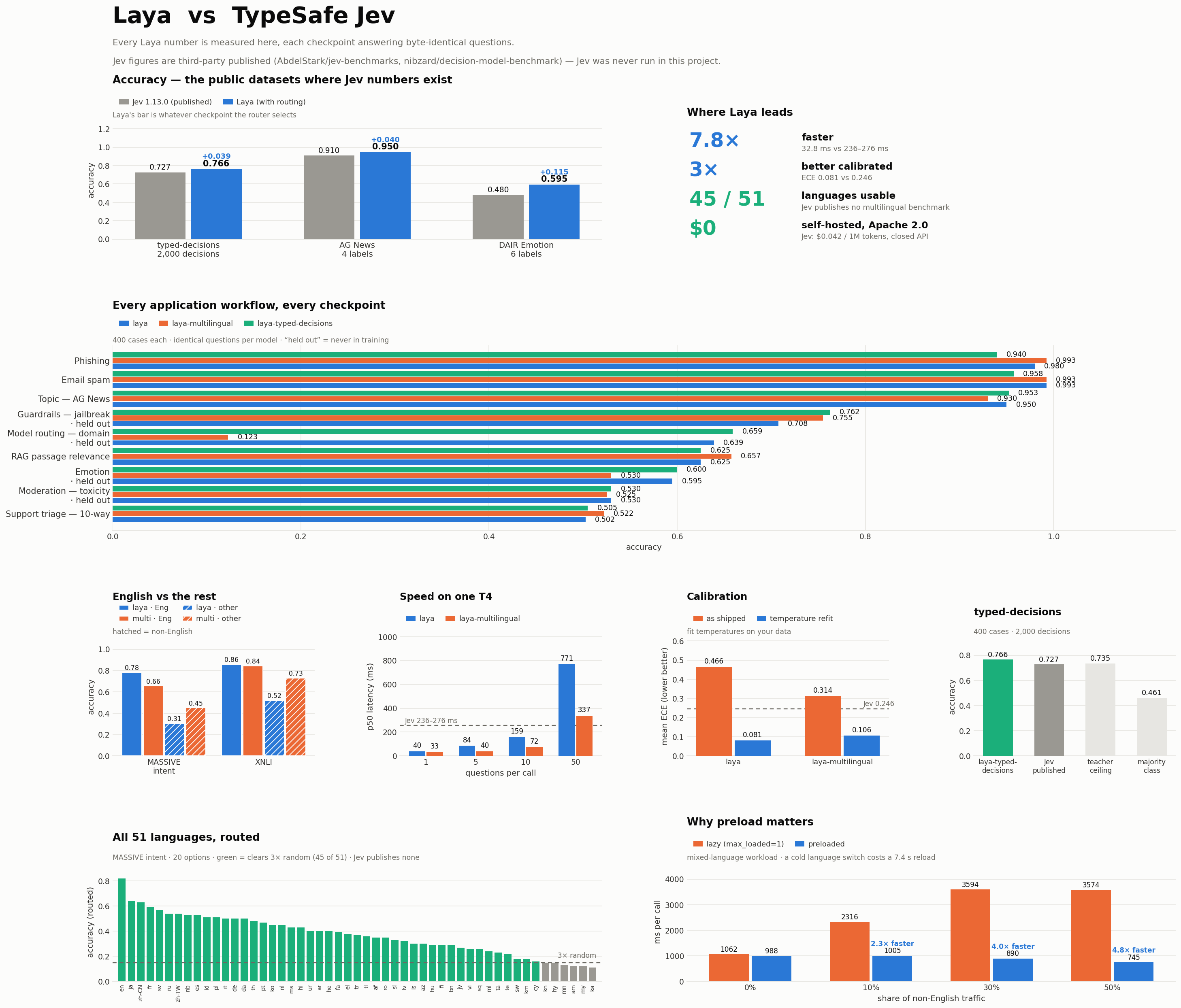
Importantly though, LLMs can generate questions in parallel, and there can be much fewer questions (q) than segments to evaluate against (n), so the cost of jev on questions (jev(q * n) + llm(q)) vs the cost of putting all the segments in the LLM can be smaller (llm(n)), (llm(n) >> llm(q) + jev(n * q) if n >> q)
The real benchmark that's missing for me is MaxSim on a real embedder from MTEB.
Take ModernBert, add a fully connected layer with 255 outputs, take a bunch of classification datasets from Huggingface, write the code to have the datasets fit the jev format on these 255 outputs, do supervised fine tuning on the datasets with that format. then use a confidence loss of some kind
Asking as a curious bystander: would that be sufficient?
I'm not familiar with ModernBert (my understanding stops around the original Bert), but it feels like this is asking it to do lots of heavy lifting. Can it do that much?


reply