Thank you, I always find listening to startup podcasts remarkably inspiring, even though I'm not sure whether or not I want to work on one yet. The "you don't need to be perfect, but you do need to care" message a lot of them share is applicable to a lot of things I work on.
Anecdote: I was working at a restaurant this past summer and was cleaning up at the end of the night while listening to the AirBnB episode of Masters of Scale with headphones. When they brought up the presidential cereal boxes I laughed, and one of the waitresses who I had been hitting it off with recently asked what I was listening to. I said a podcast about AirBnB. She looked at me funny and walked away. Smooth. I guess not everyone shares the same enthusiasm.
And it makes sense why it works so well. On a 2D screen, seeing data in linear rows and columns is the best option because it follows the same format we have been taught verbatim since birth. The first type of data processing a person does is learn to read. Left to right, each letter (column) represents a different sound (value), these letters build a picture, and the more of them there are the more information the story contains (debatable). Then we learn to build our own information by writing.
Then we move on to math, and we still do it with paper, almost as an extension of writing. When doing calculations in class it is natural to keep calculations and values in some type of invisible grid pattern that makes sense to the student. Then we get to the computer, and that format still follows.
Except that the first information processing a person does isn't reading at all. It's learning sounds and words, and we do that by listening and watching others do it. And the first thing we create isn't words on a page, it's likely something physical, in the form of building blocks or some other toy. This type of learning is great, but it can't be replicated well in a school system because it is expensive and doesn't scale well to the real world. If you're going to engineer and design a bridge, you're not going to start by making a bridge. So we're taught to make lines on paper that represent a bridge.
This is where (I hope) AR/VR becomes disruptive. An infinite amount of objects that can represent any piece of data on any scale in non space.
Think about how successful minecraft is. When I first played it made me realize how much creativity I had lost to pen and paper through no fault of my own. I was building logic gates without even realizing what formal logic was until I came to college.
Now make it engulf me, make it blank, and give me a wand and an in game terminal.
I always pour water on the AR VR user input ideas - The calorific need is too high - and thinking in 3D results in an unnecessary cognitive load.
Since this thread probably has more Finance users than usual - most people have seen a bloomberg terminal. Its ugly, and filled with arcane short cuts.
Its extremely extremely good at getting its job done, and keyboard short cuts and commands are the fastest system once you gain expertise.
Keyboard short cuts and memorized lists of invocations will regularly be the fastest way of activating commands on a system for experts. Especially once it becomes muscle memmory.
For most abstract symbol manipulation, most jobs can get away with a stack of 2D pages.
If you are working in 3D, then you are doing a pretty unique set of modifications, and the average case will not apply to you.
Which is to say that AR VR will be only for a very niche set of uses.
To bolster you point even further: take something like air-traffic control.
Operators are so in tuned with the incoming data that they intuitively make 3D maps in their head, while requiring 2D data for quick observation, comprehension, and real-time monitoring.
Working in a 3D space makes sense for blocking out movies, exploring physical architectures, or certain kinds of research. For everything else there universe has given us an amazing parallel processor connected to eyes that work really nicely on tabular data.
I think you are right. But while I think AR/VR is good for the types of research you mentioned at first glance, I have not seen any comprehensive prototype for working with elementary mathematics in 3D space taught in schools. So I hope you are wrong, and there is room for a hands on/physical type of math.
If something comes out that can help students who struggle with math visualize those concepts in a more (to them) natural way I will be thrilled. To me these concepts were always very visual, and allowed me to pick up concepts in class by thinking that way. I only have experience in the U.S. education system, and in my experience it felt that my teachers always taught in a way that emphasized problem memorization and notation over actually understanding, mentally, the abstract concepts and problem solving. This seems like a barrier for the average student, and leaves a lot of people feeling left behind or "not smart" even though it is likely a fault in the way they are taught.
If something comes out that will allow those mental barriers to be broken, I will consider it a win.
I have been in the apple ecosystem for about 10 years. For a company that has been priding itself on end user security, the bugs that have been creeping their way into the OS are just... disappointing. What is the point of paying a premium for a well polished hardware/software bundle if the OS is malfunctioning in a non trivial manner. Design? Right now when I use my calculator app on my iPhone and do 2+2+2 I get 24. That's a pretty awful design. Actually, it's a lie.
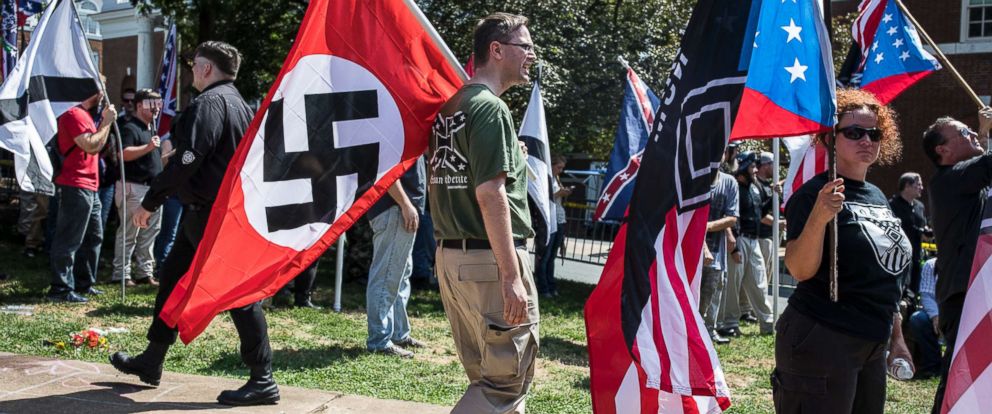
I'd say it's more sad than terrifying. Terror implies immediate danger, most people will not feel the danger that shutting down of a Nazi website should entail. Most people are not Nazis.
The value of an online community exists within participation from those that visit the website. Anyone that visits can explore the ideology from the perspective of those that believe in it, which is an invaluable tool for education.
What happened in Charlottesville was a moment in american history, no matter which side you fall on. What google, godaddy, and cloudflare are doing is (understandably) limiting community engagement on extremist websites. However by doing that it is also restricting those that want to understand who-what-where-when-why-how from accessing the conversations that occurred, and obviously, they did indeed occur. Now, anybody that wants to explore both sides of the event has to do so by navigating a barrage of news articles which loosely throws around the term "nazi", and a smaller subset of opinion articles which view it as a censorship issue.
It makes the stance of anti-censorship & anti-nazi an impossibly difficult stance to take because these two issues are being viewed as two sides of the same issue. This is not conducive to a proactive internet culture. For the first time in history we have the opportunity to explore opposing political/race ideologies from inception to protest, and instead of using it to learn about human nature and group think, companies are hitting a mute button to win a popularity contest with investors.
Here's a parable: They came for the anarchists. I am not an anarchist, so I didn't care. Then they came for the communists, neither am I. Then they came for the Muslims. Then they came for debtors and child pornographers. Then they came for me.
Or in other words, for every man there is a paragraph (in criminal law). If not, one will be invented.
Here is a parable: They came for the murderers and put them in prison. They didn't come for me because I'm not a murderer, and we're broadly ok with seeing murderers as being bad for society.
I'm not saying that your quote doesn't have power - it does. But the important aspect of it is that the targets were people the subject knows were being unfairly treated. So yes, if they start locking up homosexuals or Muslims or jews I'll refer to that parable and think "shit - I'd best do something".
As things stand I'm not getting out of bed to help a nazi.
The problem is that the white power groups are not monolithic, and there are subgroups that do not promote genocide, and actually don't even promote violence. Invariably though they all get grouped under the moniker "Nazi". Now mind you, I still find racist ideologies abhorrent, but in the end, they are constitutionally protected speech, "He who would trade liberty for some temporary security, deserves neither liberty nor security", "I disapprove of what you say, but I will defend to the death your right to say it", and "sticks and stones may break my bones but words will never hurt me"
It's really a bad slippery slope to start finding new exceptions where censorship is ok. It just shows that you don't understand how free speech works. Until crimes are committed, I don't care if your ideology is universal destruction. You should be left alone.
First, we're not talking about any random group of white supremacists. We're talking about literal Nazis.
Second, the slippery slope is a fallacy. Literally. The "slippery slope fallacy" is a textbook fallacy. In this instance, many countries make it illegal to espouse Nazi ideology today, yet Germany and France haven't become dystopian dictatorships.
"If we outlaw gun ownership for the mentally ill, that's a slippery slope to outlawing all firearms."
"If we outlaw same sex marriage, that's a slippery slope to outlawing all marriage."
"If we outlaw cocaine, that's a slippery slope to outlawing beer."
All of those make just as much sense as a slippery slope of outlawing Nazis.
We live on the "thought censorship slippery slope". The U.S., successfully and without much dissent, outlawed (socially and economically, at least) Social Democratic, Socialist, and Communist thought throughout the Red Scare and McCarthyism. Those ideological thoughts are very much so dead in America.
Now we have factions of the public literally asking for censorship. What a field day and marketed success for Government Relations. Is it really 'thought censorship' if the public is asking for the Government's mighty purifying hand of social ideology? Is the government banning Mein Kampf? Is it banning Hitler's transcripts? Is it just flexing its muscles to see if censoring the living, breathing electorate can be made acceptable by the public?
Calling out "logical fallacies" is a knee-jerk reaction when you don't have a realistic response. It is not a fallacy to think that if we ban a previously allowed form of speech, it would set precedent to make it easier to ban other forms of speech. I said nothing of leading to dictatorship. The slippery slope I'm talking about leads to the lack of free speech, which is realistic.
Furthermore, there is nothing in our legal system that bans Nazis. Fuck Nazis, and fuck their ideology, but free speech is more important. The US legal system bans crimes, not thought systems. If you don't like that, then push for constitutional amendments, but as it stands now, they are exercising free speech.
It is not a fallacy to think that if we ban a previously allowed form of speech, it would set precedent to make it easier to ban other forms of speech.
Yes it is. There are lots of things it's already illegal to say.
In fact, banning some forms of speech can increase the freedom of speech on the whole, such as when you suppress the speech of groups threatening violence on minorities, thus keeping them silent and cowed.
It's only against the law to say things that are direct or immediate danger to a particular person, such as slander/libel and ordering for a particular murder.
So if you order one death, it's a crime — but if you issue a blanket order for thousands of deaths, that deserves the protection of society? Surely the problem with plotting someone's death is not that it's thinking too small.
You are playing word games. Which specific persons have been directed to murder which specific people? Just having abstract desires about abstract groups is not enough in our current legal system.
And don't forget we are talking about censorship here. We don't have a two-step legal system, i.e. let's censor people who have abstract ideas of murder, then arrest them once they start to carry them out. Either they are planning to murder someone specific or they are not. And until we have evidence that they have murder targets and execution plans, then no action should be taken.
There are a lot of groups that espouse murderous beliefs that are not Nazis. What should we do about them? Plenty of non-Nazis have said online that all muslims should be killed. Should they be censored and/or arrested? If you think that there is something special about Nazism, then you should amend your argument to include the historical significance of Nazism as a reason you think they should be censored, rather than any reductive argument, because there will always be counterexamples in the latter.
what is "specific"? is "we should exile all black people from our town" specific enough?
where is the line between freedom of speech and let's say, emotional abuse? Should my statement "all jews are pieces of shit and deserve to die" protected by society? If it should be protected by first amendment, when it should stop protecting? When I would yell same statement to jewish kids in on a daily basis? Would it change when I would say "all jews should be exiled to desert" (now it becomes call to action) ? Would it change when same thing would be repeated by 10000 people community?
right now I keep an eye on one local nacionalist community page in facebook, and they are racists and even don't hide it. I find it troubling because the more vocal they will be, the braver members will become and they will normalize that "opinion" and soon it can become actions. I think it's naive to think that extremist groups will only talk about it without any action towards their goals.
Wait, we're talking about Germans from the 30s and 40s? People that conducted the Holocaust, that invaded most of Europe and some of Russia and many other places?
Maybe we aren't actually talking about literal Nazis. Words matter.
By the way, what about various individuals and groups that are not Nazis, but also promote death and destruction. You can see it in various heavy metal and rap subcultures. Should they be silenced?
Believing NAMBLA'a propaganda is a thought crime. By contrast, actually viewing indecent images of children involves participating in a crime committed by the creator of those images. Similarly, the demented ravings of The Daily Stormer are thought crime. Racially motivated abuse and violence are actual crimes.
Worth noting no one is going to jail for being a Nazi (except the ones that are actually killing people). Private companies are just choosing not to do business with them; because, turns out associating with people that think killing minorities for the glory of the master race is a good idea tends to be bad for business. Who could have guessed?
There is no Nazi "ideology" without victims. That is, there is no ideology that can't shift on a penny, but there's always resentment and powerlessness (as well as the megalomania that accompanies them) projected on those to be made victims. In a way, that's way older and way broader than actual Nazism, but the historic Nazis showed the horrible depths of it.
Nazis aren't about a specific set of "enemies", with Nazism becoming peaceful as soon as those are exterminated, it's more about constantly inventing enemies and sub-distinctions. It's flight from self, nihilism made movement. And even if everybody makes the Hitler salute, you can always rank them by enthusiasm and kill the least enthusiastic 5%. A boot (not a human foot) on a human face, forever, an endlessly restricting noose of hatred, and endless rush of power that doesn't fulfill or give happiness but does destroy and cause anguish. That's (one way to describe) Nazism. That's why you treat even one grain of it very seriously.
And while there is abuse of the word "Nazi" or even "Neo-Nazi", and we could argue a lot about what should be called what, just look at all the possible meanings of common words like "get", and notice how we don't get confused about that most of the time. Worrying more about what something is called than what something is much more constructive.
Though I'm not saying this as an argument to censor anyone.. not because I'm necessarily against it in all cases, but because I don't like the framing of that. When societies breed alienation and isolation, where so many kids are left to their own devices (I didn't aim for that pun but I'll keep it) in an onslaught of vapid or even cynical pandering and product shoveling, Neo-Nazis are just one of the predictable results of that, it's one of the ways a human can break.
It's like Mikado sticks (fasces?), when you let go of a bundle, I can't tell you which one will fall to the top right, but I can pretty much assume some will fall there. And the discussion is kind of futile when it starts history with the still image of a distribution of sticks, and kind of nauseating when it comes with too much self-righteousness. Are we to be applauded for not being Neo-Nazis, or should we be grateful we didn't have such a bad childhood or other reasons to be susceptible to it?
We tend to leave people by the wayside until they're old enough to run amok or join a cult or whatever. By that time it's kind of too late for good results, at that point it's like war with no winners. Of course, that's out of scope for "do I host this or don't I?", but I have to get it off my chest (every time this subject comes up).
While I'm rambling, how about freaky third answers, like host it under the condition they have to have an externally hosted comment system for every article, moderated by the UN? Don't shut them up, but don't allow them to shut up discussion about their "ideas" either. I'm not sure about actual Nazis, but for all sorts of grey areas, that's at least a thought?
It's really the post above that which does so, by putting child abuse and political affiliation on the same plane.
Now when it comes to political ideologies, the difference between thought crimes and real-world actions is not so clear. Someone might believe in nazi ideology, vote accordingly, discriminate in their personal or professional lives based on that, but not be any sort of public activist - that's what I'd call a 'thought crime.' It's their right to hold such a position no matter how repulsive I find it.
There is a qualitative difference when someone steps into actively promoting such ideologies (eg waving nazi flags or participating in marches). The thing about nazi ideology is that it's explicitly grounded in the elimination of some people and the subjugation of the rest, and rejection of the democratic principle in favor of leadership from above.
When you get to people who express support for specific policies like genocide, ethnic cleansing, etc. and who organize in pursuit of that objective, it seems to me that they've passed out of the realms of 'thought crime' and into actively threatening demographic groups and their members.
There's a tremendous and insensitive irony in using that parable to describe the persecution of Nazis when it was originally about the Nazi's persecution and genocide of groups.
Perhaps "terrifying" is just an adjective that gets more clicks and people to read what's so terrifying. The marketing of fear - on a site and an article purportedly trying to counter the marketing of fear (Nazi & hate ideologies are broadly about fearing the "other").
That's great until the mob with torches are outside your door calling for your blood. Intolerance will always win if you insist on every issue being a "both sides" debate. It's the same as trying to argue with a creationist, antivaxer or flat earther; there cannot be a reasonable discussion if one or more sides have no facts to stand on (master race bollux was bad science back in the 1920s and hasn't gotten better).
No one is loosely throwing around the term Nazi, these groups self identify as American nazis, carry fucking nazi flags, are on video chanting "jews will not replace us". Also these groups aren't new; they've been around for years technology has just amplified their voice. You don't need The Daily Stormer and its ilk to come to an informed decision on "are Nazis bad" just open a history book.
There's a valuable discussion to be had about whether it makes sense for the internet to not be a public run utility (and thus subject to full 1st amendment protections). But so long as we're leaning on the free market to sort things out, you're on the wrong side of history if Nazis are the cause you want to defend.
Sounds like you're okay with society censoring the websites of Nazis, yes? Care to clarify who gets to decide who is and isn't a Nazi?
This is not rhetorical. In my experience, a lot of people agree with "It's okay to censor Nazis" but virtually no one agrees with "It's okay to censor people that ____ disapproves of", regardless of what fills the blank.
I guess I'd say I'm against censorship not because there's no speech bad enough to censor, but because there's no one trustworthy enough to do the censoring.
> Care to clarify who gets to decide who is and isn't a Nazi?
Given the strict definition of "waving swastikas and advocating for violence against Jews" works in the scenario at hand, I'm not yet terrifically concerned about over-reach.
The only reason people wear swastikas in America is because of the strong free-speech protection that this thread is discussing the erosion of. If we banned swastikas (like Germany) then people would stop wearing them (like Germany), but we'd still have the same hate speech you're discussing censoring.
> advocating for violence against Jews
That's a pretty broad standard. If a politician supports evicting Israelis from disputed settlements in the West Bank, is that "advocating violence against Jews?" The answer "Yes according to some people, No according to others." So again, I ask: who are you trusting to decide? President Trump? Congress? You personally? To be clear, the offer currently on the table is "some middle-managers at Cloudfare, as directed by the fickle hand of social media."
> If a politician supports evicting Israelis from disputed settlements in the West Bank, is that "advocating violence against Jews?"
Someone chanting "death to Jews" and waving Nazi flags leaves little unambiguous. I'm usually a slippery slope fanatic when it comes to free speech, and I still am as it relates to First Amendment concerns, but private companies choosing not to do business with people who self identify as Nazis, wave Nazi flags and chant "death to Jews" while saying that employees of said companies are also Nazis is pretty clearly their right. Courts aren't computers and the law isn't code; judges can understand "they are Nazis."
You're answering the question "Is it okay to censor stuff that's super-duper bad", which no one is asking. The question at hand is who gets to distinguish bad-enough-to-ban from the not-bad-enough-to-ban. That you've replied twice without answering suggests, I think, that there's not an easy answer. Not that there's any shame in that! The founders couldn't come up with a good answer either. The first amendment essentially says, "Restricting speech is so difficult to get right that we don't trust Congress to do it."
Meanwhile, the point this article is making is that (in practice, if not in law) the current answer to the question of who decides what to censor is "middle managers at network infrastructure companies, based on what their social media departments suspect might hurt their brand." If you think that's an acceptable answer, great, but I don't think you can go on thinking of yourself as a "slippery slope fanatic when it comes to free speech" in that case.
> That you've replied twice without answering suggests, I think, that there's not an easy answer
There isn't. But we don't need an answer, not yet. The justice system is a lazy evaluator. This case has an easy answer--they are Nazis. If someone sued, the ruling would be quick. If the next case is more complex, reality will illuminate the nuances.
Common law systems are complex. They're also de-centralised and empirical. You don't always need a standard ex ante. We have a cultural standard regarding genocide, its advocacy, and Nazis. Existing norms and laws suffice.
(Philosophically, your question is interesting. It's practically irrelevant, though, until a matching case threatens to arise.)
But you're saying that we should just ignore the examples of super-duper-bad speech because of the difficulty of deciding where the line is. And that is a really hard problem, but it doesn't take away from the fact that people are engaging in super-duper bad stuff like calling for genocide and plotting and committing political murders.
I'd like you to expand on this. I'm sure you're familiar with the idea of a chilling effect, and can understand how accepting the open advocacy of genocide, ethnic cleansing, or terrorism would negatively impact the freedom of those who are intended to be on the receiving end of such policies.
How many or how detailed must threats against others' wellbeing become before you consider them unacceptable?
Threats of violence are already illegal. If speech crosses into threat/violence, we should punish that vigorously so as to deter further violence and to assure would-be victims. In fact, this is already policy and it's working out pretty well; Nazism lags even Islamic terrorism (at least in the US) in deaths. Surely if we tell people not to worry about Islamic terrorism, no one should be chilled by Nazism. The fear isn't rational; it's only propped up by leftist FUD (as fear of terrorists was largely propped up by the right in the aughts).
Strange, I haven't heard of anyone being arrested for promoting genocide yet, why not? Your comparison with Islamic terrorism is a red herring since we don't have Islamists holding public rallies demanding we impose Sharia law.
Yes we were, as anyone can confirm by reading back up the thread. Impugning my integrity because the topic of conversation makes you uncomfortable seems like a you problem.
You chose to answer a question that had been addressed to someone else, which you're welcome to do, but it doesn't give you ownership of the conversation as you seem to imagine.
> as anyone can confirm by reading back up the thread
I said "Threats of violence are already illegal.", to which you responded, "Strange, I haven't heard of anyone being arrested for promoting genocide yet".
> Impugning my integrity because the topic of conversation makes you uncomfortable seems like a you problem.
Ha! If I had any doubt about your integrity, I certainly don't now. Feel free to keep trolling, but you'll just be shouting into the void; I'm blocking this thread.
I don't know how you do that moral calculus, but it doesn't matter because it's still not a reason to constrain speech. At best, it's a reason to apply a hate crime magnifier to the murder/conspiracy charge.
These people are nazis. They're not being labeled, they showed up and said "yes we're nazis look at this flag". Like the false equivalence between crazies saying every political figure is nazis and people that are calling themselves nazis with pride is ridiculous.
We're not operating in a grey area, one group is waving nazi flags, chanting blood and soil, and killing people; the other isn't. Pretty open and shut.
I'm not speaking of the people who show up in public wearing Nazi paraphernalia and carrying Nazi flags. That's so easy any idiot can correctly identify them as that is exactly how they wish to be identified. I'm speaking of the people who show up in public with signs supporting free speech, unity, and love for all people that are then screamed at by idiots in masks labeling them as Nazis. Before they are beaten while police stand by and watch.
Simply because they have a different point of view.
Or any politician that openly disagree with certain politicians that have been in office for quite some time. It's a known tactic that has been in effect for a long time now. If you find yourself losing a debate, compare your opponent to Hitler.
Fortunately we don't need to decide "who is and isn't a nazi". They literally say so. They're proud of it, they've got the flags, and the arm bands.
I love how to the "free speech advocates" genocide is something that you just "disapprove" of. Im pretty sure, baring literally nazis, you can get just about every person on board with "It's ok to censor people that want genocide".
Maybe you're one of the exceptions. But if so, I'd so some introspection about why "we should indiscriminately kill people" deserves the same consideration as "we shouldn't indiscriminately kill people"; because that's the debate.
> Im pretty sure, baring literally nazis, you can get just about every person on board with "It's ok to censor people that want genocide".
Well gosh, that sounds simple! Who could possibly argue with that! And of course, quite a large number of Americans believe that legalizing abortion was genocide. So we're all on board with shutting down plannedparenthood.com then, right?
And to think, I thought censorship was a complex issue.
This really seems like a red herring considering the grandparent post addresses the question of those who self-identify as nazis and are willing to publicly incite genocide.
I think you are misunderstanding me. I agree there is no debate that those claiming they are Nazis are Nazis.
It is important to understand why people feel compelled to identify with Nazism. If we don't understand why something happened, there is nothing we can take away to prevent it in the future. What we have with Daily Stormer is a quite literal database of interactions of people who self identify as Nazis... I'd say deleting it is not the most productive thing we could do with such information.
But this isn't a new problem, is it? We have a plethora of books, essays, documentaries, and museums examining that very subject. For that matter, many modern nazis are not shy about articulating their reasons - desire for collective identity, desire for power, difficulty with women.
If you'd like some reading material:
The Rise and Faull of the Third Reich by William L Shirer - the single best historical overview
Anti-Semite and Jew - by Jean-Paul Sartre - an examination of the fundamental dynamic of nazi ideology
The Nazi Conscience by Claudia Koonz - examines the nazi worldview in detail
Kill All Normies by Angela Nagel - examining the intersection of chan culture and far-right ideology
* What we have with Daily Stormer is a quite literal database of interactions of people who self identify as Nazis... I'd say deleting it is not the most productive thing we could do with such information.*
True, but it's not some petri dish that you can keep isolated in a lab, is it? You have to balance the benefit of what you might learn against the costs that their organizing activity imposes on other people.
I don't want to defend Nazis, but I don't trust our society to accurately identify Nazis. We already see people who question political orthodoxy getting fired for "being intolerant", and there are a lot of people (even in my workplace) who sincerely believe that anyone who voted for Trump (close to 50% of our country) is a closet Nazi. Some people even question whether free-speech advocates are Nazis ("Why else would someone defend the speech rights of Nazis?"). The reason the left took an absolutist position on free speech in previous decades is because there isn't a good test for identifying deplorable speech--maybe today censorship sounds appealing to you, but consider the precedent you're proposing for the next cultural administration (if you indeed believe the country is 50% Nazi, you should be very concerned about weakening free speech).
EDIT: One other important point--who's to say that censoring Nazis is even an effective way to limit the spread of the ideology? It could well galvanize Nazis or push those on the fence over to the wrong side. What are our motives? Are we more interested in limiting the spread of intolerance, or do we want to make sure there are plenty of Nazis to punch?
You mean close to 50% of registered voters. Which are less than 40% of the population who are eligible voters. And that number is probably off too, thanks to voter suppression, disenfranchisement, and gerrymandering of voting districts.
Furthermore, it was the electoral college who decided who the president should be, in many cases going against the popular vote within their state. When you understand how the electoral votes are decided upon, the number of voters who voted for our current president grows even smaller.
In short, it's a relative minority who actually voted for Trump, and all the voters together are in the minority of all eligible citizens who can vote. Why those others didn't vote is up for debate, but I've already mentioned three potential reasons (not counting apathy).
So that other portion of the population that didn't vote - we have no idea how they stand ideologically on political and social issues. But we can certainly say there's a percentage of them who would have voted for Trump, and the ideology that supports him.
Greater than 50% of the population? Not likely. But it isn't a small percentage, either (in fact, it is probably somewhere close to his polling numbers - around 30%).
How is this relevant? My 50% figure is a rough estimate based on the voting population as a sample of the overall population. Even if the actual number is closer to 30%, my point stands--any one who believes that 1 in 3 people in the U.S. is a Nazi are deluding themselves (or more likely, they've broadened the definition of 'Nazi' to include more people who disagree with them politically so they can feel morally superior).
>That's great until the mob with torches are outside your door calling for your blood.
I hope you realize that's exactly what you're doing.
>No one is loosely throwing around the term Nazi, these groups self identify as American nazis, carry fucking nazi flags, are on video chanting "jews will not replace us".
Yes, there were a handful of those. And there were a whole bunch of other people who're simply tired of being the only ethnic group that's not allowed to advocate for its own interests.
This isn't related to the website but I also share the same sentiment towards alcohol in the workplace. It is amazing how a beverage can change an employees outlook on a company. On the company side though, it's an easy/inexpensive way to build culture.
It's also a way to isolate team members who don't drink. You may think it's an "easy" way to build a team and yes perhaps that does hold true for some groups but overall, this attitude that having pseudorandom happy hours (in my opinion) flawed and is opposite of the current PC movement in the industry.
Not at all. Rule 41 just says that if the FBI already has a warrant to hack your shit, they can hack your out-of-jurisdiction servers. This seems like good policy to me. Am I missing something about it that 'paints a target on my back'?
I recommend Creativity, Inc. to every person in a management position whom I have the opportunity to recommend it to. Although Et Catmull presents a depiction of Pixar and it's growth as a largely artistic endeavor, I feel that it is applicable to those that manage engineers especially.
The ratio of students that decided to major in engineering because they were good at math in high school vs. the students who decided to major in engineering because they they wanted to make something inspiring, I feel ( and let me stress my inexperience as a current undergrad, without experience in the actual field ) is vastly favored in career growth towards those that decide to create instead of simply learn.
While there is always room and lucrativity to tie engineers on a leash and juice mathematics and logic out of them until they reach an existential crisis, there is always (ALWAYS) room within the budget to let them set out upon a path which is in tune with their not necessarily young, but foolish and hopeful beliefs.
Curious, why do you have to remember that 2 + 2 = 4 & 3 + 2 = 5? Once you know the values the symbols represent, at that point isn't it similar in simplicity to roman numerals?
II + II = IIII
2 + 2 = 4
Don't see how the latter problem lends itself to any more memorization beyond symbols
Because if you don't memorize your 'primitive' algebraic rules you'll end up just doing a pullback with roman numerals in the middle. Integers don't have any values, they're mathematical objects with certain properties. Asking about 'the value of 5' doesn't make sense unless you're trying to convert to another, already known, number system.
What is 2 + 5? Well 2 is II and 5 is V which is IIIII. So then we have IIIIIII which is (IIIII)II or VII which is 7.
Sure, but that notation was likely born out of convenience by people who wanted a shorthand for situations where it's easier to represent a number as a subtraction but it does make the number system more complicated.
Personally I wish we had a good notation and separate single-syllable pronunciation for negative digits –1 through –9, and were willing as a society to accept numbers written with a mix of positive and negative digits.
Decimal arithmetic becomes quite a bit easier if you normalize your numbers to the digits from –5 to 5, and it would help prepare students for algebra.
An ugly thing about using negative digits with base ten (or any even base) is that you either have ambiguity on how to write numbers, or you have a different number of positive and negative digits.
For example, if you do base ten with digits EDCBA012345 (E=-5, D=-4, etc.) -- that's 11 digits -- then five can be written as 5 or 1E; fifteen is 15 or 2E, etc.
So you either:
- Accept that some numbers can be written in more than one way, which seems a huge disadvantage over what we have today.
- Rule out certain sequences of digits (E can only follow a negative digit, 5 can only follow a positive digit, if 5 follows a 0, then it depends on the digit before the 0, etc.). Not only is this inelegant, but it adds seemingly arbitrary rules for people to memorize when they're first learning how to write numbers.
- Remove one of the digits (e.g., remove E). Then things aren't symmetric around zero -- e.g. five is 5, but minus five is A5.
That numbers have interesting relationships to each-other is not an “ugly thing”, but rather a beautiful thing. The relationships exist whether we pay attention to them or not, so giving people a way to write and pronounce those relationships is a nice way to improve numeracy.
Writing numbers in multiple possible ways is really not that big a problem for most uses (for record-keeping in business transactions maybe). Personally I recommend becoming familiar with two different normalizations: all same-signed digits (the form we use now) or [–5, 5] with digits before a terminal 5 rounded away from zero. But in general for personal scratch work numbers don’t need to be normalized unless you feel like it. As long as you understand that 20–3 is the same as 10+7, it doesn’t really matter which one you think of as primary.
We use multiple number representations all the time, with e.g. the vulgar fraction 11/8 alternately representable as the “mixed number” 1 + 3/8, or as the decimal fraction 1.375, the simple continued fraction [1; 2, 1, 2], the percentage 137.5%, or the common logarithm ~10^(0.1383). Figuring out that 1.375, 1.385̅, 1.42̅5̅, 1.43̅5, and 2.6̅2̅5̅ are the same number isn’t that hard, with some practice.
I read the first two sections of On Writing and that was enough for me. The first is a memoir from Stephen King in which he goes through major events in his life. The second is a writing style guide which centers around one theme: simplicity in writing allows for greater imagination in the reader. The second section goes through sentence structure, syntax, verb/adverb choice, pronoun placement, ect.
I would agree that the first section does not say a great deal about writing, but the second section reminded me of sitting in my High School english class with my favorite teacher writing a couple sentences on the board as an example and passionately (oops) dissecting the structure with arrows and margin notes to explain how and why a certain picture was playing in my mind while reading them.
Placing King's personal anecdotes and thoughts about the "life of a writer" before the actual lesson felt to me, when I began the second section, like I was sitting in the classroom of an artist who has far more passion for his work than I have ever felt for anything in my life before then. It made the writing lesson more impactful, if anything.


Anecdote: I was working at a restaurant this past summer and was cleaning up at the end of the night while listening to the AirBnB episode of Masters of Scale with headphones. When they brought up the presidential cereal boxes I laughed, and one of the waitresses who I had been hitting it off with recently asked what I was listening to. I said a podcast about AirBnB. She looked at me funny and walked away. Smooth. I guess not everyone shares the same enthusiasm.