The best thing about Xiaomi is that they support their products very well. Almost all of their phones get security updates each month. That is a rare thing in Android nowadays especially with Motorola announcing that they will stop updating their phones with the new security updates. [1]
How did you go from However, because of the amount of testing and approvals that are necessary to deploy them, it's difficult to do this on a monthly basis for all our devices. It is often most efficient for us to bundle security updates in a scheduled Maintenance Release (MR) or OS upgrade., which is a quote from Motorola, to Motorola announcing that they will stop updating their phones with the new security updates.?
Keeping up with the monthly updates would likely be preferable, but batching them is still a long way off from how you've characterized it.
Because anyone who has watched Motorola after their acquisition from Lenovo knows they will stop updating phones very quickly. In under a year in some cases.
Yes, please feel free to take them to task over that.
But while you are doing so, please avoid misrepresentations as egregious as Motorola announcing that they will stop updating their phones with the new security updates. (and less egregious ones too).
Well that phrasing is misleading I admit. But what would the reaction be if Microsoft started to have security updates every three months or so for Windows.
That's because you probably bought the phone from a re-seller who re-flashed a "custom global ROM" (compiled by who knows who) which does not receive OTA updates because it's not compatible with the official releases. This is what happened to me. After noticing that I don't get the updates for a while I started to investigate and I re-flashed one of the official ROMs from http://en.miui.com/download.html.
They do security updates for Redmi 1S regularly though afaik. They also update their phones with the new version of MIUI. MIUI 8 is coming for Redmi 1S next month. [1]
The worst thing about Xiaomi is their invasive software. In order to use a Mi Fit band you have to create an account with them and grant their app every permission under the sun.
I love their hardware, it's a frugal premium grade that's hard to come by. I just wish it were more open and their software wasn't so questionable.
That's interesting, because when I've got my Xiaomi Mi3 I've compared it with my Samsung Galaxy Tab. Mi3 was rooted, had almost no crapware and allowed me to pick what permissions app gets. On the other hand Tab required Samsung Account and rooting it voided guarantee.
Mi Band vibrates on incoming connection, sms and apps so maybe that's why it requires permissions to phone, sms and notifications.
The official app has more features admittedly, but nothing that justifies the level of permissions it asks for. At most it should need access to the camera/photos to allow you to set a profile photo, and full network access to create/sync your account data to the "cloud".
Nothing that the official app does justifies the following permissions it asks for:
  Device & app history

    retrieve running apps
    read sensitive log data

  Identity

    find accounts on the device

  Location

    approximate location (network-based)
    precise location (GPS and network-based)

  SMS

    receive text messages (SMS)

  Phone

    directly call phone numbers

  Photos/Media/Files

    access USB storage filesystem

  Wi-Fi connection information

    view Wi-Fi connections

  Other

    view network connections
    connect and disconnect from Wi-Fi
    read Google service configuration
    draw over other apps
    control flashlight
    reorder running apps
    modify system settings
Xiaomi isn't explicitly mentioned in that article and I have no doubt they put backdoors in their products for the Chinese Government. I guess my question is, would you feel differently if they were a US company and it were the the US Government holding the keys to backdoor?
There's a reason China has been investing in developing it's own CPUs and telecommunications hardware and it isn't so that it can more easily spy on others. It's because they themselves no longer wish to be spied on... and maybe so they can spy on everyone else a little too.
I'm not saying it's right. I don't know what I'm saying actually. I'm just going to grab some tin foil...
Everyone I know with a Xiaomi is on an ancient version of Android and their phones are largely considered disposable. They might do the monthly security updates (all Android OEMs should be doing this) but that's very different than keeping up proper OS updates.
Considering how cheap the Nexus line is, I'm not sure why people even both with the super-budget phones. You get a lackluster experience, few if any OS updates, worse everything, etc just to save $75 or so. A Nexus can last you years compared re-buying a new budget junker annually.
I really wish the mobile market and buyers could mature to the point where we start talking about environmental responsibility here. We shouldn't have to buy phones this frequently and filling up landfills with this stuff. My Nexus is getting old and is still fine. My laptop is at least 6 years old and after an SSD transplant, runs like a a top.
No idea. There's an app that's supposed to test for doze and it says "hw sensors: ok" (or similar) but "config: off". Like it's configurable somewhere but wasn't enabled by Xiaomi.
My guess is that Xiaomi already has a similar feature (perhaps less sophisticated) called "Autostart". Most app aren't allowed by default to wake up in the background and kill your battery. Only some (e.g., whatsapp) are whitelisted and, of course, you may whitelist additional apps yourself.
Overall, I'm happy with the battery usage of my Mi3. I prefer the Xiaomi Apple-like UI over Google's standard -- but that may be just a habit...
yes. my Xiaomi Mi4C gets an update every week. sometimes some minor regressions, but they're always fixed the next week.
i certainly prefer that to the typical android software update cycle from most manufacturers/carriers
i got my Mi4C in April 2016 and it has received several OTA android version update and monthly android security patches. there are certainly many insignificant UI changes, but there have been android updates occasionally in the last four months.
similar to what others have mentioned, the place where i purchased it added google apps in a way that prevented regular updates. once i re-flashed and reinstalled google apps, i've gotten updates every week
I've been using Redmi 2. It's only around 75$, It has good support and roms and the MIUI os itself is beautiful too. They are doing the right thing, I can't care much about privacy stuff till I am getting my things done.
This quote from Jony Ive really made me feel for the guy:
“When you’re doing something for the first time, you don’t know it’s going to work. You spend seven or eight years working on something, and then it’s copied. I have to be honest, the first thing I can think, all those weekends that I could have at home with my family but didn’t. I think it’s theft, and it’s lazy.”
I don't know if he actually said that but isn't all innovation incremental? I understand he put his heart and soul into it, but there has been tons of people who have worked equally hard before him to get to where he got (Apple itself copied it's UI from Xerox). Apple has also blatantly copied and consumed many companies in the past.
There is so much code copied around these days. This is all just the way it is and how we have decided to move ahead as a society. Making judgments on others is uncalled for.
And yes innovation is incremental but this is Xiaomi not simply borrowing design cues but literally cloning a design. See for yourself - here's their take on Japanese company Balmuda's air purifier:
https://www.balmuda.com/jp/airengine/
We're talking about the Jony Ive who designs rectangles?
Meh. Him and Apple have stolen plenty! Isn't Steve Jobs famously quoted as saying "great artists steal"?
Anyway, what's the fucking difference if you steal a few pieces here and there or the whole thing? Nothing.
(EDIT: A piece of something is still a whole piece that you've stolen. And Apple has also stolen entire apps, like Konfabulator. They get no sympathy from me.)
Apple literally redefined what a smart phone is. While he borrowed design cues from history, Braun in particular, applying that to the phone space and coming up with a design language that had durability was a big breakthrough.
Remember in 2006 Nokia, Motorola, RIM and others made literally everything but rectangular phones. They were covered in buttons and other crap.
Ive's vision of a virtually button free phone was strikingly different at the time, a device even simpler than the Star Trek communicator pad.
>Anyway, what's the fucking difference if you steal a few pieces here and there or the whole thing? Nothing.
It's very hard to strip something down to the essential components and integrate those into a package that becomes obvious in retrospect. The steering wheel in a car, the magnetic seal on a refrigerator door, these are all obvious now but at the time were huge breakthroughs.
If you can't see the difference between copying and working to reduce something down to the fundamentals you're obviously unaware of how one is lazy and the other is crazy hard.
The Sony Ericsson P800/P900/P910 had a removable keypad making them effectively rectangular phones. The Neonode N1 had a touch driven interface, including the slide to unlock feature. Then there were PDAs like Sony Clie PEG-TH55. All this a couple of years before the iPhone.
The reason phones didn't look like rectangles wasn't because no one had the idea, but because screens were expensive and touch technology (and other technologies like data) wasn't mature yet. That's why you had something like the LG Prada come out at the same time (or even slightly before) the iPhone.
Just because you are first to adopt something (e.g. because your customers don't mind paying a premium and you've secretly developed it for years including controlling the supply chain) doesn't mean you should have the sole right to use a concept derived from evolution of components.
This post should be marked as reference anytime some Apple-zealot brings the "Apple invented everything under the sun" argument.
Don't get me wrong: Apple deservingly got tons of credits (literally, in their bank accounts) for the combination of great hardware/software/ui design/marketing of the past 10 years. They still do.
But their success means that just like Jony Ive got "inspired" by Braun, Apple is not inspiring everybody else.
I use air-quotes on inspired because while it's obvious in hind-sight the way the Braun styling was adapted, distilling the design language of a blender or a pocket calculator made in the 1960s into a cutting edge product launched in the mid 2000s is not exactly a straight-forward exercise.
If you look at the mock-ups people made of the hypothetical and long-rumored "iPod phone" that Apple was working on you'll see how many of the design decisions Apple took were completely unexpected: https://www.engadget.com/2009/12/28/how-early-iphone-predict...
Apple didn't invent everything under the sun, and they didn't even "invent" everything they use. What they do is try hard to come up with a striking, simple design that they know will differentiate their products. They also get very upset when people steal their design without even trying to make it their own.
Notice how Apple's been quiet about the Microsoft Surface device, and even though it directly competes with the iPad, they're still partnering with Microsoft to build Office apps. I think they respect Microsoft here because re-inventing the tablet and making a compelling notebook product of that sort takes a lot of bold engineering.
Apple's appropriation of the keyboard cover (http://www.theverge.com/2015/9/9/9297805/apple-ipad-pro-micr...) is one of those things that's inevitable. I'm not sure what else they could have done here, they were boxed in, so it ends up being 'theft' by some definition of that term. Microsoft doesn't seem to have raised this as an issue, so I'm sure there was some communication here between the two parties to make sure it didn't poison the waters.
It's stylistic exercise which may be (or not be) enabled by technological advances but it's no different than when 80s cloths coming back now. Understand that I'm not saying it's trivial to accomplish this exercise. Specially to achieve global cultural icon status. But I'm arguing that part of journey to achieve that status requires other's following your lead.
Xiaomi "thin, machine-metal" laptop looks as much like an Macbook as iPhone's 6 antenna lines look like HTC One M7.
Apple has been quiet about Microsoft (and vice-versa) because if Samsung v Apple design patent wars taught us anything is that it's pointless and expensive to engage in these fights.
I had a P-800. I can tell you the iPhone experience was much more than the screen. It was swipe, multi-touch, the smooth animation, the attention to designing applications down to their icons.
The iPhone redefined what a smartphone should be using nothing that wasn't available to anyone else in the market. Except, perhaps, a Jony Ive with a mad man like Steve Jobs pushing him.
That said, the unibody MacBooks set the gold standard for stylish laptops. It's natural someone else would follow the formula many years later. Even with only evolutionary changes, the MacBook is still light years apart from its Windows-running copycats.
Of course, the P800 was a couple of years before the iPhone. The point is that a P800 with five year more modern components would look similar to an iPhone. The first iPhone was actually pretty crappy by today's standards. No GPS, MMS, 3G, appstore, teathering or iTunes sync IIRC. Because they were breaking into the market before the technology was ready. Similarly to Tesla now, which is why their cars will be expensive and crappy by tomorrow's standard for things like autonomous driving.
Since it was released so close to the launch of the iPhone that it's not like Apple could have possibly dropped everything and rebuilt their entire design strategy around it. The protracted lawsuit with Samsung showed how Apple had been working on that design for some time and had already settled on a number of key design elements, the "rectangle" being one.
Those are interesting historical artifacts, but none of those had any lasting impact on the market, they were merely historical curiosities that nobody ever copied.
> Just because you are first to adopt something...
No, it doesn't give you an exclusive right per-se, but there's a lot of ways you can make a touch-screen phone short of copying Apple's design millimeter for millimeter like Samsung did.
So long as there's such a thing as a design patent then, legally speaking, yes, you do have the sole right. That's what patents are for. I'm generally not a fan of patents, but you can't argue that they don't exist.
There was incredible variety in the phone space prior to the iPhone, phones came in all shapes and sizes with vendors exploring increasingly implausible formats out of desperation. Post-iPhone they all converged, coincidentally I'm sure, on Apple's design. It's only now we're seeing some divergence from that.
Today we're seeing the same ridiculous convergence with keyboards where everyone plus dog is using the Apple layout. This hurts consumers since there's far little choice than there was before.
There's a huge difference between "copying" meaning "taking a good idea and giving it your own spin and making it even better" (e.g. Android vs iOS) and "copying" meaning "making a shitty knock-off version of a thing that looks almost identical to the other thing superficially", as in all the bargain-priced knock-off phones that are sold using Apple's branding (http://mashable.com/2016/06/17/apple-china-knockoffs/#qO0bF3...). Most companies fall in the middle here, but some skew very close to the bottom.
Not only did you completely miss the point, you changed your whole argument when the facts didn't suit your views anymore. Phone look like they do because of the state of technology. I don't know why this is hard to understand?
"Of those only the Prada is close"
No, the P900 was a smart phone and therefor a rectangular phone like the iPhone, but with a hardware keyboard in addition to the virtual one since touch technology wasn't very good. The Neonode had a touch interface because they had developed their own touch technology. The Sony PDA has a very similar design since it was made for using applications similar to what would later become common with phones when larger screen and faster processors became available. The LG Prada was also a premium phone, which is why it could look similar to an iPhone.
"they were merely historical curiosities that nobody ever copied."
Except Apple then I guess.
"There was incredible variety in the phone space prior to the iPhone"
Not really. Most phones looked largely the same with a keypad and maybe a joystick, because that was the state of technology at the time. Just like most phones look the same today, because of the state of technology today. Even if you wanted to make a different phone today there wouldn't be much point. Because you would have to create your own parts, your own operating system and your own application ecosystem just to be 99% similar to everyone else since you're using the same technology. Look how things went for Google Glass, which isn't surprising since the technology isn't ready.
"Today we're seeing the same ridiculous convergence with keyboards where everyone plus dog is using the Apple layout."
Do you mean the Sony layout? Because that's where the chiclet design was copied from.
I'm not sure how re-inventing the form factor of the phone in combination with an aggressively touch-friendly operating system is "copying". That Apple abandoned hardware buttons almost completely had a lot of people reeling. They hated it.
By that definition the Ford F-150 is a copy of the Porsche 911. I mean they both have four wheels and an engine and things like door handles and windows.
The Sony x505 has "chiclet" keys, but they didn't invent them. These things were on calculators decades prior, and infamously the IBM PC Jr.'s wireless keyboard.
What I'm talking about is the peculiar arrangement of the arrow keys and other subtle things that are very distinctly Apple. Given how quirky some keyboards can be, where seemingly every vendor has their own spin on how big the Caps Lock key should be or where backspace should be positioned, they're all using Apple's keyboard as a blueprint going forward, literally copying it.
Apple's fairly unique arrow key layout showed up in early versions of the iBook and other Apple machines in the 2000-2001 era, possibly earlier.
At this point I can only conclude that you don't want to understand. I've already explained that there were a number of manufacturers who had a vision of a smart phone with a similar form factor to the iPhone. Steve Jobs was a fan of Sony, he wanted to run Mac OS on the VAIO line of laptops. As that didn't work out, he ultimately made his own slim aluminium laptop with chiclet keyboard. Richard Howarth who was involved in designing both the iPhone and the MacBook Air had previously worked at Sony. Before Apple adopted the Sony style their products were plastic and/or colorful.
Apple has always copied, just like they copied much of the current iPhone user interface from their competitors.
This quote is meant to make you think about the differences between stealing and copying ideas. It isn't literal. It doesn't even make sense literally. Stealing means you make it yours. It is no longer theirs. How do you do that with an idea? You make it so much better that people forget about the previous idea you took.
Other than the white color, they actually look different to me. That said, I can show you two editors which look completely alike. I hope you feel the same about them.
Imagine if I said: Atom is such a rip off and the sublime guy must be feeling that GitHub is lazy and a thief. I wonder if GitHub compensated the sublime author who is a small indie dev!
> Imagine if I said: Atom is such a rip off and the sublime guy must be feeling that GitHub is lazy and a thief.
Edit: my original comment wasn't very constructive.
My issue with the analogy is that Xiaomi openly copies the design of competing products that have gained success, at least in part, due to having differentiated designs. Usually they copy without providing even incremental innovation or product differentiation.
In the case of Sublime Text vs. Atom, GitHub developed an editor with a fundamentally different underlying architecture. Github also made Atom open source, which addressed one of the main complaints against Sublime Text. Atom offered obvious and non-trivial product differentiation.
Also, Xiaomi specifically targets products that have distinctive designs. Sublime Text's design doesn't look that distinctive. What are the components of the design (excluding configurable parameters like a light/dark theme) that Atom copied? The main similarity I see are the tabs, but neither look distinct from most other tabs (i.e., Chrome browser tabs).
Parent comment gave screenshots and claimed things are copied. I am also giving two screenshots and telling you that those are copied. What is the point I am missing?
Apple's UI and the UI from the Alto are while conceptually similar (insomuch as any two cars are conceptually similar), not even in the same family, in look, feel or user interaction - its a bit like comparing a Model T with a 39 Ford - while both are cars, the controls work in pretty dissimilar manners.
I am sick to death of patent trolls, frivolous copyright lawsuits, RIAA/MPAA bullying, the broken and ridiculous patent system, bullcrap like the DMCA, and how obviously bought our lawmakers are in terms of extending and broadening copyright laws. It really makes it impossible for me to have any sympathy for "victims" of copyright violations or patent infringement. They can go pound sand.
This. Patents should be at most 5 years in IT, should they exist at all. The Macbook Air was first published in 2008. It's not a new idea anymore, not a new design, if you want to be the leader then create new products, and be happy if you're the one setting the trend for the whole design industry. For example Apple could remain first by creating an OS that customers trust. I wouldn't trust a Chinese design (not yet, for now) for my professional stuff because of malware, spy kits, bugs and even just the cheap materials.
One reason that designers don't participate in open source is that they don't like the design-by-committee approach. On open source projects, everyone (understandably) wants a say in the visual and interaction design of the software. But while having many participants contributing to source code can work well, I don't think this model works well for design.
It sounds really undemocratic (why shouldn't everyone have their say?). And it undoubtedly contributes to the sterotype of the designer as diva or precious about their work. But can you think of an open source project praised for it's visual and interaction design that was colloboratively develeoped with dozens or more participants? If you can, it will be an exception, not the rule.
When there are too many participants in the design of a program, you end up with a project pulled in every direction and pleasing to no-one. But if you go the opposite route and limit design decisions to a dedicated UX team, you end up generating resentment from contributors or users who feel their input is being ignored (just look at Ubuntu for an example of this).
From a designers perspective, either of these scenarios will seem like a no-win situation.
If someone copies my software work, I don't go around calling them lazy. Even I spent all my weekends on this lovely piece of code, only for someone else to "steal" it.
You don't get that something proprietary was stolen and the creators are upset? From a software perspective you can't imagine how you'd feel if a critical piece of your business software was reversed engineered and copied by a competitor? An example might be finance and low latency trading. Or an ML / AI breakthrough. Or anything on the fringe still providing a competitive advantage and not a solved problem on Github yet.
How can you paint such a broad stroke, like THOSE DESIGNERS, I'LL NEVER UNDERSTAND THEM! With the implication being those designers aren't open and collaborative and willing to share and don't understand iterating in the open like us developers. The quote is from one specific designer.
Maybe I'm a bit too much of a STEM-headed engineer but I think you are making a false comparison.
UX is fleeting. Even the best UX will grow stale over time as styles change, and it's style propagates (as it will if it is truly revolutionary) it will become mundane.
Technology breakthroughs are hacks in the laws of physics. Humanity hasn't fundamentally redesigned the Steam Engine since James Watt. It just can't become more efficient. Nobody cares steam is mundane, or well understood. We still use it in nearly ever power plant.
So no I don't stand why people feel the need to own something as fleeting as a singular moment in the pseudo-cultural-artistic space Product/UX design fits in knowing that it'll pass and forever be looked on as an out of style relic of a by-gone age. To do so honestly and earnestly makes you sound like a diva.
Trust me, a lot more work went into the iPhone's design than you'd think.
One analogy is brute force searching for an approximate solution to an optimization problem.
It's problematic when others take your solution if you did all the brute forcing.
Design is only fleeting inasmuch as an approximation could be fleeting. Others build off an approximation to find better solutions. But without the earlier solution, we'd find ourselves in a much different part of the sample space.
> From a software perspective you can't imagine how you'd feel if a critical piece of your business software was reversed engineered and copied by a competitor?
Definitely, could definitely understand if it was about money/business. But that is never mentioned when designers get angry about their designs being stolen.
I think it's not about money/business. I think it's a different mindset where a "stolen" design devalues your own contribution. A developer who makes a breakthrough never feels like their contribution is devalued if someone else copies your idea; quite the opposite, copies validates that you made a genuine breakthrough.
I think the substantive difference may be that a design isn't a standard or a protocol or a shared library or even just open source code; it's not, unless the designer explicitly chooses to make it so, a common resource. If you take my kind of crappy Python scripts for turning Markdown files into an ePub and make them less crappy, you're taking something I released as open source and making it better. If you take my web site design and reproduce it on yours, though, you're not improving on something I've intended to share. You're just saying, in effect, "Hey, that looks cool, so I'm taking it." I may not be particularly bothered by it, depending on context, but I might have put an awful lot of work into that to craft a specific--and hopefully unique--look for my site. You didn't put any more work into your site beyond what it took to copy my work. In effect, I've done design work for you without compensation or credit.
In Xiaomi's case, what they're doing is, more or less, that last bit: the only work they're putting into their designs is the work necessary to make them look like somebody else's designs, expressly because the designs they're copying are successful in the marketplace. If I was a designer they copied I wouldn't be very thrilled by that. Money definitely plays into that, but credit for the design work is a big part, too.
It could be that I came from the creative world, but when I develop a cool feature and someone copies it and they don't attribute what they are doing to me, I feel devalued. It makes me quite mad. And that's what is happening here. Apple painted the Mona Lisa and now some upstart is selling prints of it for cheap and not giving credit.
The PARC machine barely scratched the surface of what could be done, and it was far from being packaged in a way that could be marketed to consumers. It was inspiration, and any engineer knows that's a long, long way from a working product.
Usually they've caved in to the conventions of the market (iOS notifications) or missing features (F.lux). The amount of blatant theft seems minimal. They usually put their own spin on things to differentiate somehow.
Even Microsoft has gone its own way with Windows after some heavy overlap with MacOS and other windowing systems (DESQview in partcular). Windows 3.1 was more different, and Windows 95 borrowed more heavily from OS/2, which was wildly different from MacOS. If anything Apple was forced to adopt the right-click menu popularized by Microsoft since it became the de-facto standard.
Meanwhile other companies have damning memos that say "Make it look exactly like Apple's product".
Sweeping generalizations like this aren't helpful when the degree to which these things occur is extremely important.
Xiaomi has built its entire company on blatant theft of designs. Let's not say "oh, it's okay because Apple once did X" which is like saying murder is no different from a speeding ticket since both things are illegal.
They were never first to market with a category of product, that's just not in their DNA. Even the Apple I was a computer largely similar in terms of features to a multitude of others on the market, but it wasn't a direct copy of any of their competitors.
Their ideal product entry point is when consumers are familiar with the product but are unhappy with the current offerings because they lack the right contextual fit.
Maybe if you have a specific example here of where Apple's flagrantly copied something like Xiaomi has we can talk specifics.
Apple Maps, Apple Watch, F.lux, Those are just off the top of my head, Apples been around a long time and its happen many times (but as Ive said all companies to this). I just don't like deniers where Apple is viewed as all good and in the light, when they absolutely are not. (and neither are most companies) Apple is just made because its happening to them right now and not the other way around, its eating their potential revenue.
Apple Maps: In what respect is this "stolen"? By the same argument did Google steal from Garmin or MapArt who in turn stole from cartographers? Not sure what you're saying here. Mapping applications have been around for decades. Apple needed one on their phone. They made one. It's similar to other mapping apps, Google's included, but also took a new approach in some regards.
Apple Watch: It's a smart watch, they didn't invent the category, but it's a novel form-factor, instantly recognizable. The operating system is also highly distinct from others. You'd never confuse an Apple Watch for anything but an Apple Watch. Some of the Android based ones are going out of their way to look like non-smart watches. At least Motorola has their own design language here.
F.lux: Significant functional overlap but these sorts of tools have been around since the 1990s. It's not like F.lux invented this, they just popularized it. Maybe it was a dick move on Apple's part, or maybe it was just a thing they thought should be core to their product.
When Microsoft wanted to add faxing functionality to Windows they could have bought WinFax, but they instead made their own thing. Is this stealing?
I think your definition of stealing and copying is extremely loose, to the point where the term has lost all meaning.
Your comments use words similar to mine like "the" and "a". Are you stealing my words?
Apple created Apple Maps and at the same time did not approve Google Maps for iOS6 (they obviously later approved it because the uproar was deafening). Like I said those were only the first few things that came to mind. Apple steals ideas, Google steals ideas, Microsoft steals ideas, Facebook steals idea... They all do it, that was my only point. And yes I stole your words, please pay me for them.
This would be analogous if the Mac was named the Apple Alto and looked like almost exactly like the Xerox Alto and even cloned the marketing materials and presentation templates that Xerox used, if Xerox had ever made the effort to come up with distinctive marketing for their computers (which they didn't, but that's the bar for "this situation is like that situation").
No but Apple innovated and made them a thing, after the Macbook Air, the PC industry scrambled to release ultrabooks (a new category then), after trying to push horrible netbooks on people.
Netbooks were actually great. I loved mine. It had 11 hours of battery life (this was around 2007 or 2008 when typical pc laptops were getting 2-4 hours). A lot of my classmates liked their netbooks too. The ultrabook is also fantastic, but much more expensive (I'm typing this on a $2000 ultrabook, my netbook was $200).
There were many popular netbooks before the MBA came out. Apple showed that there could be a popular high-end version with excellent build quality and now the market is responding with a cheaper model with the similar build quality. This isn't stealing. It is the standard model of almost every popular consumer electronic device since the 1980's.
If it's got the same functionality and the same design as the Japanese product but only "sells at a fraction of the price" compared to the original product then they must be doing something better than the Japanese.
It's either lower wages, better productivity or both, either way, it's better for us, consumers, which now have additional money to spend on other products and services which further enrich our lives (where additional money = Price of the Japanese product - Price of the Chinese product).
I would imagine at least some of the additional cost comes from putting in the work to create the original product in the first place. If Xiaomi can just come along and clone an already successful air filter with a proven market, it doesn't surprise me that they could sell it for less. And we do lose when companies stop taking risks in innovating new products for fear of the copycats.
If the Chinese company can easily clone a product and still deliver something bellow their competitor's product price I'd say the R&D costs for the original company were overblown.
The Japanese company should have recouped their additional costs between the product launch and the Chinese company's product launch. If that interval was too short for them to do so it means that, as I said before, their "costs to create the product in the first place" were too high to begin with. For society's greater good we should put no premium on "I was here first/I did it first!", but only on "I build this product using less resources, hence it has the lowest price!".
> For society's greater good we should put no premium on "I was here first/I did it first!", but only on "I build this product using less resources, hence it has the lowest price!".
I disagree completely.
If we didn't care about being there first we wouldn't have patents, and without patents, why would companies bother spending any money on R&D?
If you spend money on R&D, you have to recuperate those costs. If a competitor could just make an exact copy, then even if they made it in the same exact way that you did, they'd be able to sell it at a lower cost because they spent nothing on R&D.
Patents aren't perfect, but they exist for a good reason: to promote innovation for "society's greater good"
> If we didn't care about being there first we wouldn't have patents, and without patents, why would companies bother spending any money on R&D?
Yeah, it does seem like we're on two different sides of the barricade. Patent-related discussions never seem to end once they get going (even more so on HN), but I just wanted to add that I was surprised to read recently that James Watt himself was being criticized during his lifetime for holding patents for too long and for too important an industry.
> By patenting the separate condenser Boulton and Watt, from 1769 to 1800, had almost absolute control on the development of the steam engine. They were able to use the power of their patent and the legal system to frustrate the efforts of engineers such as Jonathan Hornblower to further improve the fuel efficiency of the steam engine. By way of contrast, and fortunately, Trevithick did not patent his equally innovative high-pressure design.
> Ironically, not only did Watt use the patent system as a legal cudgel with which to smash competition, but his own efforts at developing a superior steam engine were hindered by the very same patent system he used to keep competitors at bay. An important limitation of the original Newcomen engine was its inability to deliver a steady rotary motion. The most convenient solution, involving the combined use of the crank and a flywheel, relied on a method patented by James Pickard, which prevented Watt from using it. Watt also made various attempts at efficiently transforming reciprocating into rotary motion, reaching, apparently, the same solution as Pickard. But the existence of a patent forced him to contrive an alternative less-efficient mechanical device, the sun and planet gear. It was only in 1794, after the expiration of Pickard’s patent, that Boulton and Watt adopted the economically and technically superior crank. The impact of the expiration of Watt’s patents on his empire may come as a surprise as well. Far from being driven out of business, Boulton and Watt for many years were able to charge a premium over the price of other steam engine manufacturers.
And I'm pretty sure that our industrial past includes many such cases in which the greater good was sacrificed for the interest of the few, like it happened even in Watt's case.
But you have to weigh the costs of the damage it does to the business they're copying. If it makes that company less willing to innovate in the future, we're at a loss. If the copy is so successful it runs the other company out of business, we're at a major loss.
Parasites depend on their hosts survival, since if the host dies, the parasite dies too.
In the 1970s and early 80s nearly everything produced in Japan was a crap copy of a US or European design. Motorcycles, cars, hifi (more lo-fi). Only later did they figure out how to make things reasonably well and start to innovate themselves.
Now it's China's turn. In ten years it'll probably be someone else as Chinese development continues. Just as Hollywood got their start years ago.
I'm not condoning what Xiaomi does, but he absolutely should question whether he's spending his time in a way that is ultimately satisfying. Maybe his regret indicates that he should have prioritized his family higher.
TBH it just looks like a YAWUB (yet another windows ultrabook) at this point. Metal rectangle windows ultrabooks are pretty standard and the category inventor has been out since 2008.
People shit on Xiaomi here but even imitation requires some level of artistry and finesse. This looks like a good clone of Air, and I haven't seen Acer/Lenovo/Dell manage to do that yet.
I cannot trust Lenovo being competent at what they do after superfish, I wonder how can any of the readers of hacker news still think of buying from them... (this doesn't mean that competitors are competent or anything, but being caught like they were undermines my basic trust threshold)
> I cannot trust Lenovo being competent at what they do after superfish, I wonder how can any of the readers of hacker news still think of buying from them.
It was certainly a giant blunder, but like all of these issues they are Windows only, and usually only if you use the factory OS image.
Like most(?) of the HN crowd not using Apple products, I run Linux, so that kind of stuff doesn't affect me at all. I assume the remaining ones reinstall using their own installation-media too?
It doesn't excuse Lenovo's behaviour and certainly can make you question their judgement, but all in all, I'm one of those who are putting less weight on this issue than others may do.
What matters most to me, are the practical aspects: what can this product do for me? And Carbon X1 Thinkpads are among the best lightweight laptops out there.
No, it's not only if you use the factory OS image: http://www.theregister.co.uk/2015/08/12/lenovo_firmware_nast... - it is, indeed, only if you use Windows for now. But there was a time where pressing the "restore" key on the IdeaPad (yes, there was one, that starts a windows restore) would bork a Linux install.
> It was certainly a giant blunder, but like all of these issues they are Windows only, and usually only if you use the factory OS image.
Don't forget that your hardware vendor is also responsible for firmware. Not saying that Lenovo is special in any way here, but delivering terrible software on the factory OS image might have implications for software quality in general.
Unfortunately, nothing comes close to ThinkPads. I dislike Lenovo a lot and would ditch them at first chance. No vendor wants to be that chance though. (Proper keyboard, 3-physical-button pad/point, not too hot, etc.)
I'm not too concerned about Superfish - that was only the consumer junk, right? The BIOS-Windows-auto-install stuff was more concerning. But hey, little choices. Lenovo is certainly incompetent - look at the X240/T440 with the terrible pad design they backtracked on (obvious). Or the Carbon keyboards they ended up ditching.
> Proper keyboard, 3-physical-button pad/point, not too hot
HP's ZBooks? You can even replace almost any component inside. I got the first generation model (15") and it's very good. Sure, it's not light and slim.
What thinkpad would u get today? I looked into the T460 but (a) they seem to have many variants within the same model and (b) I saw too many negative reviews online.
The T440p was bulky, hot - total shit. The graphics were super weak, and the screen was utter junk. Dunno if the newer ones are considerably better; they probably fixed a lot.
The X250 is pretty good, though you get a keyboard at random and will need to replace the part (always get next business day warranty) if you get one of the junk ones. Otherwise it's a nice laptop - I've not seen anything I like more (though it could be better, of course; a 3:2 screen for starters).
I've used a T450s, and the keyboard feels fantastic on it. At 3K res it'd probably real nice. Unless you need a specific CPU/GPU, stick with the X260/T460s (s for slim). Perhaps compare reviews to the X250/T450s to see if it got worse?
Assuming you don't need high-end power (like quad core), it's more of a preference if you want a small 12" or a larger screen. I dock my X250 and it seems fine, even driving a higher-pixel external monitor. I'd go for the X260, but if software support was better for hiDPI I might consider the T450s. (If they had centred keyboards without numpad, maybe even a 15" model.)
Edit: FWIW when using it in laptop mode, I run CPU throttled to 50% or less to keep it cool. I have the cheaper i5-5200U option and it's fine for emacs/VS/browsing. At full power it can play Dolphin emulator Smash Brothers Brawl and Melee at full speed, but just barely.
The T460p is a very good deal if you want something light, powerful and extensible for a very good price. You can get a version with a quad-core i7, dedicated Nvidia graphics card and 3k display for about 1400 USD. Combined with a three-year guarantee it's a very good deal I'd say, and much better than what most other manufacturers (including Dell and Apple) offer for this price. I also own an X1 Carbon, which is a great laptop but a little underpowered for my needs (and hard/impossible to upgrade).
I assume this was implemented to improve usability for people with short fingers. As someone with tiny fingers, I would rather have a huge Ctrl key and a tiny fn key
I'm in the same boat. Additionally there is a huge immunity of people running Linux on the thinkpads which make it easier to pick the right components when buying, and sovle and find work around when you do hit a problem.
That's easy: Who cares what Lenovo installs on their hardware? Whatever is on there is coming off as soon as I get it. And their hardware is excellent for the price.
I think the thing with Lenovo is, their hardware is sometimes excellent for the price. It's like they are Intel with a tick-tock cadence except the ticks are all complete duds. Just make sure to wait for a new model to accumulate at least 6 months of solid reviews before pulling the trigger.
I've been getting ThinkPads on corporate refresh cycles for 15 years and after they sold to Lenovo, I never know if a new machine will turn out to be a flaky piece of junk or totally solid and well built. Seems like it's always one or the other.
You can't necessarily remove it. For example, there's a mechanism called the Windows Binary Platform Table that automatically copies an EXE from the UEFI image and executes it with kernel-level privileges on each boot. It's intended to be used to deliver drivers or anti-theft software after a clean install, but Lenovo was using it to deliver malware, and there's nothing you can do about it unless you have a signed image without the malware included.
I have bought/used a lot of high end ($2000+) windows notebooks: acer, asus, MSI. The trackpads all suck. Seriously, it is insane - macs had a working mouse in 1984!
You bought all the junk. Thinkpads and expensive Dells and HPs are good. So is the surface book. The brands you listed are good at making low quality laptops. Their high end sucks. Lenovo's high end is top-notch and their low end is not as good as Acer's for example.
the comment you replied to said that the specific brands mentioned have bad high-end offerings, so if they want to buy high-end and get their money worth they should look elsewhere.
In a life long ago, I was responsible for an office full of Thinkpads, not long after Lenovo spun off from IBM. These were machines that "just worked", and if there was a problem, their on-site service was legendary. I never had to worry about them.
I now own a 3rd-gen X1 Carbon for personal use. After my experience with it, I'll never buy or recommend Lenovo again. Months of waiting on backordered parts (for their flagship laptop), repeat visits from their service center, and the end result is finally a laptop that mostly works, but is starting a slow death very early because of cheap plastic construction and tight tolerances that aren't so tight after a few months of use. I've had it a year and a half (I bought it the week it came out); I'll be lucky if it makes it to two years without another significant problem.
Terrible experience all the way around. It looks pretty on the website, but it's not built to last like their older products were, and their service is a shadow of its former self.
The Carbon X1 is probably positioned as a competitor to some non-existent Macbook Air/Pro hybrid, and it does have a pricing thereafter. It will certainly have to be more expensive than a plain Air, with its weak CPU and otherwise lackluster specs.
That said, I still find complaints about the X1's price from an Apple-user funny. Whenever people in the past people was critical towards the pricing of Apple products, the response was always "Real quality costs money" and "It's worth it".
Is that no longer so? And is a quality higher than that provided by Apple unimaginable?
Taiwan isn't China. Completely different legal structure.
And Lenovo is a Chinese company, but I guess they've made the cost-benefit analysis that they have more to lose getting sued by Apple in the US for copying their products than they have to gain by selling a cheap Macbook knockoff in an already very competitive Chinese market.
The difference is that Lenovo and Acer sell to US market whereas Xiaomi does not. This means that they have something to loose. Xiaomi will be in big trouble if they ever try to break into a market outside of China (and other places with weak IP laws).
Lenovo inherited its entire design style from the IBM sale. A modern thinkpad isn't that different from one from 2003. Lenovo doesn't need to copy anyone. Its designs are already considered classic and unique to their brand.
Xiaomi is the new kid on the block and just copies Apple designs. Some examples:
Also they have no legitimate sales channel in the US/EU, so there's a jurisdiction issue with a lawsuit. Apple knows it can't just march into China and win a lawsuit. Acer and Lenovo sell in the US/EU, so they have to play ball with our IP laws.
If you do business together in a country, you have to follow the laws of that country. Xiaomi does no "official" business here and there is nothing for apple to sue.
Well, if we're talking copies, then Airs are just a scaled-up version of the eeepc - same 'sharp wedge' shape (that is apparently why Lenovo X1s are being called clones of Airs).
The eeepc was the thing that proved there was enough interest for a low-power-but-mobile computer, which ended up turning into the tablet market. Crappy build quality, but people went berserk for them.
And how!!! My ex-boss read the press announcement on a flight (sometime in 2011?) and went gung ho. On coming back, he got me to inquire with our regular/local hardware vendors. Turned out nobody (in our small city) had even heard of it, so the inquiry was escalated to the largest city of our state. Still nothing. Finally, he actually got a staffer to fly to Mumbai and get him a piece.
Within the next few weeks, he bought not less than 7 more, to gift them away to family and friends!! Yes, berserk is right. :-)
I have both air and xps 13 and to me they are not even comparable. Yes, thin bezel looks cool at the first glance but that's about it. Instead of metal under your hand you have this weird something, keyboard works much worse, they did not even make reasonable handle to open the laptop like there is in macbook air. Also the power supply is chunky and you cannot fold it nicely.
Don't get me wrong, it's a really good laptop and I've chosen it over so many others on the market. I would probably still choose it for my linux laptop (lenovo x1 is neat but I'm done with lenovo with all the stuff they've done lately). It just looks poorly to me in a direct comparison.
I can second that. I am using XPS 15 and dual booted Ubuntu along side Windows 10. On Windows, some apps icons and texts are pixelated because of the 4k display (it reminds me of the time when the very first Retina Macbook Pro came out). Aside from that, pretty solid and fast laptop, given the size and the spec (can go up to 32 GB RAM + i7 CPU).
Not particularly. There are still lots of "bits" to it - colours, materials, vents, contours, etc. So few companies actually get rid of them, but it looks so much better when they do.
There's no venting or contours, and just two materials: meta and carbon fibre. Personally, I find the carbon fibre much more pleasant to rest my wrists on than metal and it looks quite nice in person. The thing that looks like venting on the left edge is actually a battery indicator. I'd get rid of it, personally, but that's my only real complaint about its looks.
There are a few things here I could nitpick about. I'm never really a fan of the textured look of the material surrounding the keyboard - I don't know why so many people who design laptops opt for this. Would much prefer just a solid matte black, no texture. Also I don't understand why the bottom of the laptop and lid are one color and the inside is another - why? I think a single color across the entire laptop would look way better.
Sure, it's a lot sleeker than most laptops (not made by Apple), but its design leaves me asking a ton of "why did they choose that?" kind of questions.
I dont like the shape of it :) That triangular body (or trapezoid in this case?) is not pleasing to my eyes. It could also be that its just something to get used to, but still.
Not at all, but the submission's title is literally "Xiaomi’s first laptop is a Macbook Air rival" and this discussion started with the question what's wrong about the Dell XPS13 that makes it worse than the Macbook Air, so I think it's fair that to point out that the design characteristic in question is found in both devices.
In any case, what does being a fan have to do with appreciating good design? I'm no fan of Apple either, but I appreciate their product design nonetheless. I'm not sure why your reaction was that sharp.
I don't typically buy ultra-think notebooks (or really many notebooks in general) but I've had good experiences with Asus if you want that "85% of a MacBook quality for 50% of the price" thing.
Last laptop I bought was due to needing something for occasional DJ and projection graphics projects. Since it needed to be mobile, even a small form factor desktop build was not really feasible so I went looking for the best thing I could grab at Microcenter for under a grand.
Now this was a few years ago so the specs aren't top notch anymore but for just under $1000 I got an Asus that's not quite all metal (bottom half of the shell is plastic but the rest is aluminum), 1920x1080 screen (but worse viewing angles than a premium display), an i7 processor, 16GB RAM, and the mobile variant of the then-current class of nVidia GPUs (because I needed something that could handle all of the OpenGL stuff I was messing with). The only other sucky part was it came with a HDD instead of a SSD but at some point I'll upgrade the SSD in my desktop and hand that one down to the laptop.
The nearest competing Apple notebook at the time (at least 1920x1080, i7, 16GB RAM, and discrete graphics) would've run me about $2500. Build would've been better, display would've been a bit better, and if it had a SSD or one of those hybrid drives, that obviously beats spinning platters.
But none of those things (or all of them together) was worth spending more than double. If it was going to be my only machine for everything I'd have probably paid the premium for an Apple or another higher-end notebook with nicer display and SSD but for a secondary computer at around $950-ish it is still running perfectly when I need to take something on the road.
Asus is particularly adept not only at providing a good value but actually innovating in the Windows ecosystem. The Vivo AiO, for example, is a fantastic hybrid—part iMac, part Wacom tablet and with a wireless phone charging ability to boot. It doesn't seem like that should work, but the screen is actually rock solid and without wobble while drawing on it with the pen.
It has wireless charging and NFC build into the base, wow! That's really well thought out. I'm not too sold on the iMac-style monitor computers, but I admit they seems to have done a lot right when making the Vivo AiO.
On some of the models you're describing the motherboard is soldered to the chassis, that makes changing the HDD a bit perileous.
Apart from that point I echo the sentiment. These are (were?) great little laptops for the price point/form factor
Afaict, it only teaches you a good lesson about voiding warranties and looking before prying the whole thing apart. (Almost destroyed mine opening it up to clean up the airways)
At the very least, Lenovo and Dell are innovating and making attractive, eye popping products that don't copy Apple at all. Copying is a poor strategy that in the end run gets you nowhere, you end up not being able to differentiate yourself other than being a copycat that's one step behind.
I don't trust their battery run-times. I was looking for a laptop and finally settled down for a Lenovo Thinkpad 13.
Thinkpad's battery is 42 Wh with a wifi surfing run-time of almost 7 hours [0], although it being sold as a 11 hours run-time. It hasn't a dedicated graphics chip.
Xiaomi's battery is 40 Wh and it sports dedicated graphics. Macbook Air's battery is 58 Wh and it has integrated graphics, lasting around 10 hours [1].
Assuming a similar consumption, Xiaomi's would last less than 7 hours for surfing. But it has dedicated graphics (NVidia 940M) with a consumption (30W) that doubles integrated options (Intel HD in Lenovo and Apple laptops). So, probably it will last 5 or 6 hours of just wifi surfing, even less.
Laptops with discrete GPUs tend to have an integrated GPU as well, and keep the discrete GPU powered off most of the time. The 30W you quoted is the maximum power consumption for the discrete GPU, when it is active and running at full tilt.
The battery claim may be for the smaller model, which uses a Core M (similar to the new Macbook). That wouldn't be comparable to the Thinkpad or Macbook Air at all.
I was hoping Xiaomi would also launch a version with Ubuntu as the default OS. An i5, 8GB DDR4 Ram, 256GB SSD, backlit keyboard and 10 hours battery backup at $750 sounds like a sweet deal.
I know Ubuntu can still be installed on the Windows version, but I expect it to be a hacky path with installation issues, getting the hardware to play nice and the backlit keyboard to work, and finally maybe even battery life issues.
An out of the box solution like the XPS 13 at a lower price point might work.
I think the appeal of this product might end up with user demand for this feature as well. That could result in Canonical and/or Xiaomi offering fixes to support Ubuntu on Mi Notebook Air.
If the RAM is user-upgradable, this will make for an excellent dev machine. Given it's a chinese laptop, it will surely not be locked, so Ubuntu will run well as well.
pretty naive. especially since it has a dual graphics with nvidia. which is really akward to "correctly" install on linux.
and then there are drivers. pretty sure that there won't be many stuff that directly works on linux.
That there even worse alternatives isn't helping. Avoid third party binary modules. Sure, they might work right now but you'll have no guarantees it'll work in the future. You also risk interactions with other subsystems (sleep etc.). It would be like Windows, where your printer might prevent you from upgrading your operating system.
If you intend to run Linux on the thing, buy things that Linux supports out of the box. That probably means sticking to the working Intel stuff for now. You'll thank me later (or not, because you won't miss the problems you don't have).
While your theoretical point of view is solid, reality kind of disagrees with it.
The binary blob provided by Nvidia have been quite reliable across the years (and I think they've been available for more than 10 years) while the open source ATI/AMD drivers have frequently failed to deliver.
Nvidia drivers do fail quite regularly, especially on laptops. Brightness control randomly stops working, suspend/resume is extremely unreliable, there are login issues on systems with both Intel and Nvidia graphics (supposedly solved with Mesa 12, which can only be found on Arch and Gentoo right now.) It's certainly not a panacea.
In my experience, the open-source radeon drivers are significantly more stable. Fglrx was a stinking pile of crap that has officially been abandoned - the whole driver team has switched to the open-source drivers, now.
Binary blobs provided by Nvidia are extremely unreliable. I've had to ssh to a machine because the graphics don't work at all after some kernel upgrades.
Linking to Theano-CUDA is always a nightmare.
Forget about optimus. That has never worked correctly on Linux.
The only reason I can see someone wanting nvidia on linux is for CUDA. And in that case, you can't just use the ubuntu pre-built version of the drivers.
If you are not doing neural nets locally on Linux, you shouldn't get a discrete graphics card. And if you do get a discrete one, make sure it's not Nvidia since their open source drivers are much inferior to AMD's.
My current (and only) working solution is to disable the Nvidia GPU on a host and use it PCIe passthrough to assign it to another Linux or Windows VM. That's the only stable solution that doesn't break the world when enabling/disabling the discrete GPU.
We shouldn't have to revert to such extreme measures...
At the moment my only two issues with Optimus are that they crash X on wakeup if loaded, and that DPMS doesn't seem to disable properly after the screensaver ends. For the earlier you can add an a suspend hook to unload the nvidia modules, and for the latter you just need to switch to a tty and back to get the screen working again.
Both are somewhat annoying, but far less than only being able to use it in a VM. That said, I'm curious about how you manage the VM output, considering that PCIe passthrough requires a dedicated screen.
I normally run the GPU headless for machine learning. In the rare case I need to access the desktop shell of the VM, I just connect via Chrome Remote Desktop.
In the even rarer case that I wish to play a game, I have an HDMI connection between the GPU and my projector, which I can enable with a remote control.
Learning how to use qemu is a bit of a pain (hint: use qemu directly, virus is a huge waste of time) but after the initial learning curve the setup is seamless for my use case - and I feel safer without the GPU drivers having access to my normal desktop. I much prefer this setup to dual-booting Windows for gaming. The VM spins up in a few seconds and shuts down when not in use (turning off the GPU in the process).
This is an honest question, and I appreciate your answer in advance.
I have a desktop with an HD 6850 and the radeon driver has always worked well, I used to play DOTA2 on it.
But this is a very old GPU now, and all newer models (HD7xxx and up) were having performance issues with the radeon driver last time I was reading the forums.
R9 270X in my case. The Rx 3xx and newer (and they're slowly porting it to older devices) use the newer AMDGPU driver stack, which is supposed to be even better, but I haven't tried that myself yet.
Windows may have been released 7 years ago, but it gets updates pretty frequently. Windows 7 has had the ability to install drivers from Windows updates for a few years now.
The linux comparison isn't recent either. That was the exact same procedure I had to do on an nVidia-stricken laptop (thankfully not mine) four years ago.
I was running OSX in VMWare every day for a couple of years, did iOS development. With 8 GB RAM and fast Intel SSD in my Windows laptop, the VM was faster then hardware MacBooks I saw. Modern hardware-assisted virtualization is very efficient, BTW that's exactly what allowed those cloud computing.
VmWare’s virtualized 3D accelerated GPU is IMO very good.
Not sure about compatibility with the recent OSX, though. I used lion and mountain lion, and those worked well. AFAIR I’ve used vmware tools from Fusion.
In the host machine, you need reasonably fast Intel CPU, hardware-assisted virtualization enabled in BIOS/UEFI, enough RAM, also unofficial VMWare patch to unlock OSX guests on PC hosts.
In the guest OS, you need VMWare tools for OSX, they exist because VMWare supports OSX guests when running on OSX hosts.
Or just wait for Windows 10 Redstone on Aug 2 and run the Bash on Linux Subsystem for Windows. No overhead and you get full speed with unmodified debs.
The $540 version uses Core M3, which basically has 15% lower performance than the latest iPad, so I doubt it's going to be too great of a dev machine (just because the iPad seems fast with 1 app per screen, doesn't mean the same performance will be enough for 20 tabs and 5 other programs running at the same time):
What kind of development would we be talking about? I still use my 2009 MBP for day to day development. It's ~10% slower than a Core M3, I usually do webdev on it, but it's also fine for AOT things like Rust, Haskell and even some C here and there (I recently compiled RethinkDB, no biggy).
Things that really hurt are short battery life which is ~1.45hrs, and that it misses the modern CPU extensions which will obsolete it soon. Both of this issues obviously won't be present in a Core M3, so I see no reason why you wouldn't dev on an M3 unless you compile big native projects with great frequency.
I'm surprised you find Rust and Haskell bearable. Because for both languages slow compilation is a pretty well known problem[1][2]. On my old laptop (2011 MBP) compiling and interpreting (ghci/ghcid) took so long that it was distracting. This isn't even a big project; just a medium-sized one with a little over a hundred Haskell modules.
Well to be fair I only do hobby projects in both languages. My Haskell project is a C compiler, and my Rust project is a game engine, both compile in seconds. Both have just a few modules. Most complexity is in the dependencies, which have some compile time consequences but not terrible so far.
This is my gripe, unless you spend hours customizing each laptop ubuntu makes a 10 hour battery life shrink to around 2 hours with only the default 'power saving' features turned on.
If they use a good Wifi card or it can be opened easily (which should be a given if RAM can be upgraded). I bought the XPS13 2015 and had a lot of struggle with it until I exchanged the Broadcom card for one from Intel.
I think he's talking about the UEFI non-sense that often happens with western manufacturers to lock it to windows (preventing the switching of the signing keys).
I'm not sure how true his thought is in relation to china,but neither here nor there.
I just wanted to point out that the absence of UEFI thing doesn't automatically make a laptop "work well" with Ubuntu, as someone could read from this comment. Ahh, it is edited already.
I've been looking for a new laptop recently, but I can't seem to find a good.
My primary concerns are:
- not to have open it up and clean from dust. That's what all of my laptops, except Air, suffered from. They get dust inside and then get hot and loud. I move around a lot and it's inevitable. I don't want noise and I want as little heat as possible.
- Multitouch Trackpad like on Macbook Air. It's wonderful!
- Long battery life with moderate to high power cpu.
- Great 13" monitor that you can see what's going on in direct sunlight.
- As much as possible of internal fast storage.
- Lots of RAM.
- Great typing experience. I'm fine with chiklet on Air. It's just fine. I write a lot, more than typical programmers - treatments, instructions, screenplays on a daily basis.
Currently, only Air fits the bill, but it's getting old.
So, a high(er)-powered Air 13" with longer battery life and more RAM and disk space and better screen with updated CPU and graphics would be great. I haven't found one. I don't care which OS it runs. They're all the same these days.
I would definitely also say wait for September. We at least know new CPUs are coming in, but there are also other nice rumors. Especially since you practically want a MBA again, just more updated (I myself am also waiting for the updates in September and have been for a while).
Terrible suggestion. Razer's products do not remotely meet the fit and finish of Apple's products.
I'm typing on a Razer Blade Stealth right now that I've had since February and it is already falling apart, with most of the screws on the bottom plate falling off and a trackpad that constantly sticks. The fans buzz and brush against their metal grills often enough that you have to gently slap the side of the laptop to make it stop. I've also had its USB-C charger literally fall apart when the USB-C connector came off, which then had to be replaced in its entirety. The 2015 MacBook charger at least let you swap the cable, which was a lot more sane since it appears USB-C is fragile.
After 10~ years of owning Apple laptops, this was a rude awakening of how bad it can be not buying one. I'm hoping moving to a Thinkpad next will not be a similar disaster.
This is all ignoring the insanely bad support from the Razer Web store, which was probably the worst ordering experience I've ever had. Their support is so infamously bad, that even the fans on /r/razer usually defending the company beyond any sense of proportion will admit it is bad.
If it suffers from the the problems you mentioned, then consider getting it replaced. I've had a razer blade for 3 years now and never had issues related to build quality. The only problems I faced was getting the drivers for certain Linux distros.
Because I have an Air, albeit an older model and I want to get a new laptop. Buying a new Air doesn't make sense since it's outdated a bit and doesn't fit most of what I want.
Build quality and weight is phenomenal. It seems to be mostly immune to dust too. If there were only a new model with updated specs and a better screen, maybe a bit more juiced-up battery too! I'll wait until Autumn to see if Apple has anything new regarding MBA. I'm eyeing that Surface Book. Pen, if anything like Wacom, would be a godsend for Photoshop sketching. Wacom has Companion 2, which on paper is a good thing, but it gets real hot (like real cintiq) and is real noisy when you push it.
I have a 2015 Razer Blade that I really like. I use it as a my daily Linux work computer and it runs Ubuntu great (with the caveat that I don't use sleep, hibernate, or the nvidia card; and the webcam doesn't work).
Pros:
- Almost unbeatable specs for the chassis size
- 14" display, which seems to be getting rarer now, but I really appreciate the extra inch of screen space
- High quality display, if you get a good IGZO panel. Some panels have color issues, but this seems to be common to all IGZO type panels--my Nexus 6 has the same issue. You can return it until you get a satisfactory panel.
- Can dual boot to Windows and play modern games at high quality if that's your thing
- Clean and simple chassis (excluding the silly bright green logo)
- Excellent Linux compatibility
- You can purchase an aftermarket SSD and upgrade it yourself if you're OK with voiding your warranty
- Very nice trackpad with multitouch that even works in Linux. It has physical buttons which I personally prefer, and that's also getting harder to find
Cons:
- Absurdly expensive
- Parts are proprietary so you have to mail the unit in for even the most basic repairs (changing the battery for example), and repairs are expensive
- Matrix-green keyboard and logo color scheme is a little silly and might not look professional. I put a matte black round sticker over the lid logo which helps
- A poster below mentioned screws falling out; I've noticed this with mine too. I think since the chassis is aluminum and is itself part of the system's heat sink, the heating and cooling expands it and gradually pushes the screws out. But pulling out your Torx screwdriver once every few months is enough to fix the issue
Overall I very much like the machine and even moreso since it supports Linux without headaches.
Yes, well, that's basically the story of laptop Linux unfortunately. I wish it were otherwise! In my experience "Linux compatible" always carries the "except for..." rider, and outside of old Thinkpads you're going to have a hard time finding otherwise.
In this case the machine is excellent and compatibility could be much worse. Wifi, Bluetooth, multitouch trackpad, touchscreen, etc., all work out of the box. The Nvidia card might also, I just don't use it at all so I don't know.
> But pulling out your Torx screwdriver once every few months is enough to fix the issue
God, I wish that was true. I cannot keep screws in my Razer Blade Stealth at all, not for lack of trying.
Only three of the eight screws remain on my back plate: The two in the back by the hinge vent and the left-hand middle screw. Possibly these areas suffers less thermal stress? Who knows.
Also: Good luck finding replacements when one pops off and you lose it.
Surface Book perhaps? If you want similar build quality to Apple in a laptop, I can't think of much else comparable. I bought one a few months ago, been pretty happy with it so far. With two batteries in it (tablet and base) the battery life is outstanding (6 to 8 hours depending on what I'm doing). When connected, both batteries are used to power the laptop.
I would seriously recommend the Dell Xps 13. It is the size of a 12 inch laptop because of zero bezels. Comes with easily replaceable nvme ssd (soldered 16 GB RAM though) and the integrated Intel 540 graphics helps me play Dota, Bioshock,etc easily...
Superb Linux compatibility...and can be charged using the Dell companion battery pack !!
I've had the XPS 13 for a year and can't agree more. There is no other laptop out there other than maybe the MacBook that has its size, weight, and power profile. You won't be disappointed.
Is a high powered CPU, and the fastest, most dense storage really that high of a priority for a mobile device? Your target should be portability, and battery life. Not something easily achieved with your list of requirements. Nothing you listed sounds particularly resource intensive.
I work on film and television. My work consist of writing a lot (A LOT) of text and emails and spending a lot of time in Photoshop and Premiere. Sometimes even After Effects. Also, I'm mostly not around power outlets and am carrying the damn thing in my hands around. Air is really where it's the sweet spot for me - considering build and weight. I had several HP pro ones before (two different models), but they didn't really fit the bill. Too heavy and get hot and noisy real fast. Battery life was crap too. I really hate when laptops get noisy and hot due to dust (which I can't avoid and can't bother to clean often/at all). Air, for some weird reason seems to be mostly immune to dust. It's wonderful. Sure, it gets hot and a bit noisy after you push it, but it reverts to normal ops soon enough when you lay off the gas pedal. Not sure if it makes sense, but I presume anyone that manhandles laptop around a lot can relate those being important.
I'd get a new MBA if there were a new one with updated specs and a better screen.
You're just expecting too much out of an ultra lightweight form factor. You can't get the power you request, out of a laptop designed for maximum portability.
But I did with MBA. I can write for a whole day, almost, edit videos and do fast compositing works on it all on the go. I would like an updated model, and there isn't one. If there isn't one by the end of the Autumn, I will get another manufacturer. Just looking for which. Surface Book seems to be the likely candidate.
Your criteria appear to be "I want the best possible for every component." The issue here is that there are trade-offs involved: e.g. a high-powered CPU will drain your battery life.
With your criteria, only the Lenovo X Carbon series comes to mind. (Maybe the Dell XPS series?)
Your criteria appear to be "I want the best possible for every component."
That and that it's compact (13") and lightweight and that it makes coffee! I know, but that's what I want. As for high-powered CPU, I would be OK with some super-duper i5 mobile or something. i7 is not a must. Also, I was under the impression that CPUs, these days, do not drain battery more than low-powered one if you're not hitting the gas pedal?
I have the MiBand, and it drops hundreds of times. I had eventually lost it. Sure, it's only $10, but it doesn't make sense to buy anything just because it's cheap.
And I have the earbuds too. Sure another $10, but the sound is very mediocre compare to the stock headphones I got.
I also have one of their TVBox, bought it mainly for my Chinese parents. None of the channels work anymore oversea.
Sure, $10 who cares. But I would rather spend bit more on something that last longer than a manufacturer producing more electronic junk to this already-polluted planet.
For a cheap, lightweight development laptop I use a Toshiba Chromebook 2 (2015) with a 240GB SSD fitted. Build quality is not up to Apple standards but is still decent.
Screen is much, much better than Macbook Air screen though. Battery life is very good. I use Arch Linux and With a bit of tweaking, everything works (bluetooth, wifi, keyboard backlight, suspend/resume etc).
I can also dual boot into ChromeOS which is quite nice in it's own right. Lovely machine for the money ...
You can buy http://amzn.to/2a4isAQ [0] and swap it in. This model is compatible with the Chromebook you mentioned. It's about $50 for the 128GB SSD expansion.
[0] Yes this is an affiliate link through my Amazon account.
There are laptops which are thinner, faster or has better graphics than MacBooks. But as much as I have checked, every one of them falls flat on battery run time comparison.
If there was anything that comes close to Macbook's 12 hours run time, I would have seriously considered switching.
You're assuming they pay $100 for a Windows License. Or that building, validating, and supporting a Linux image would be cheaper in the long run than installing Windows and maintaining a few drivers.
And that's not even taking into account the market demand for such a thing which is negligible.
I've heard OEMs make more money from pre-installing adware/spyware/trialware than what they pay for the Windows license.
You can always decline the EULA and try to get a refund for the bundled Windows license. In Europe it is supposedly easy to get a refund due to a European Union directive on unfair commercial practices: http://no.more.racketware.info/en/europe
Is that a troll? Linux has tons of native applications in just about every category. It is absolutely packed with alternatives. I don't use Linux daily anymore, but I almost never had an issue finding programs for what ever task I wanted to accomplish. More often then not the problem was a glut of choices.
Yes lots of alternatives, you can argue that there is an alternative for virtually everything that is available if you are willing and know how to find it.
This is the same argument that Windows Phone (ironically) make, but most people want the same programs that all of their friends run. Computers and most other electronics are appliances to most people they just want them to work without any thought.
It is fair to say that certain software doesn't run (or run well) on Linux. It is also fair to say that most people don't want to learn how to use new software especially when they already know something else that works.
I think however, it is misleading at best to say that it doesn't have many native apps.
I dislike Windows but I dislike OSX even more, so software is indifferent for me, seeing as I will be installing Linux anyway. I suspect there are many people who think like me.
OS X nudges past Linux for me because it is much more efficient (this is what I was alluding to in my statement about hardware and software working together). If Linux could work out some way of being just as efficient with the battery as OS X, I would put Linux on my laptop instead of keeping it only on my server.
I don't know of any objective benchmarks on that regard, but I do know that Linux is famously erratic in conserving power, with results often varying a lot depending on the specific hardware.
I am also have an extremely negative feelings for OSX. As a Linux and Windows user it is just frustration for me all the time.
Plus I have the magic touch of making every Mac to crash while I am trying to get a contracted job done on the customers location. It is seriously so frustrating. (Mostly it is video/music production related)
They say nothing of Linux support, so they probably didn't care much for it. The bigger model has Nvidia graphics, and the smaller model has only 4GB RAM. For a Linux notebook, I think you'd be better off with one of the Dell or Lenovo with good support.
> any other combination of hardware and software is
The ThinkPad X250 I'm using right now with Linux would disagree. The Sony Vaio I had in 2010 and put Linux on would disagree. The Dell Inspiron I had last year would fit the description of "broken" but not "badly broken".
Are there poor pairings of hardware and software outside the Apple garden? Sure. Does that mean everything outside Apple's garden is poor?
I concur. No true Linux user gets stumped by these things.
For my part, I've had perfect, smoothly-running Linux workstations for decades now, and for me its a no-brainer to select hardware for the purpose of running Linux. Like I said, if this has decent Linux support, I'll switch from Apple in a moments' notice. Linux can do just as well, if not better, than OSX for many, many things ..
I do see the Nvidia dual-graphics chip causing problems on Linux.
They should have dropped the Nvidia chip all the way, it is a shitty compromise. Nobody is going to play games on this machine and the Intel IGP handles all other workloads just fine. Also, the 12.5 version coming with 4GB is a bit disappointing.
If you mean the kind of Optimus thing, it's actually handled okay out of the box with recent Nvidia drivers. I had problems with it about two years ago, but recently reinstalled with LM17.3 and the Nvidia drivers it automatically installed handle the dual graphics thing just fine.
Hey man, could you elaborate on that a bit or point to a tutorial? I am running Kubuntu 16 on a Skylake+950M laptop, and I can either use Intel or Nvidia but not both at the same time. There is Bumblebee, but my machine freezes on startup....
Hey, I'm not sure what to tell you. My Optimus functionality has been working since installing the "newest" version of the official Nvidia drivers (nvidia-352) on LM17.3. I turned it on in the BIOS and have been able to select from the "NVIDIA X Server Settings" utility ever since. I remember trying out Bumblebee on LM17 and having similar issues as you mention, and was unable to boot with Optimus enabled in the BIOS.
I see, so I guess Mint has some combination of drivers (kernel + nvidia) which just work for your system. Good for you! Thanks for answering. Maybe I will take a look into LM!
I ran linux as my primary os for 10 years. This was never true for me. Something was always broken, or wonky. 10 years of platitudes about how "it will get better", but it didn't. There is always new hardware to support to various degrees.
I got a mac, because I wanted to be able to listen to music and print at the same time. Also, I was tired of all my photos coming out pink.
What was stopping you from listening to music and printing at the same time? Never seen that one (USB mono laser printer/bog standard mp3 tracks to play).
It had something to do with device drivers not loading. It was stupidity. It was also 2003.
The printer is a classic linux desktop experience. CUPS wouldn't recognize the printer, not even as generic postscript or something, or maybe it did, but wouldn't take advantage of its high resolution because binary blobs being evil or some other high horse. Either way, binary blobs figure into this. So I had to actually buy a driver and color profiles from some company in Germany that had paid a license to make a closed source driver. While I could now print at high resolution, all the photos had a pink cast, that no amount of correction could take away. Boot into Windows, thing prints fine. Ironically, the company touted its color profiles as being better Windows.
In 10 years, I never had a machine that had all of it's hardware working correctly. But hey, maybe 2016 is finally the Year of Linux Desktop!
I have a Linux DAW and two Linux Dev workstations that don't need much "sysadmin'ing" beyond the normal update maintenance schedule, so I dunno .. I think the beauty of Linux is that it allows for your end of the extreme, and mine, and doesn't just force everyone into a pissed-in sandbox, like OSX.
Installed Ubuntu once, I can't help to notice that it tries too much to be macosx. I would rather keep using macbook, or use plain debian instead if installing wifi driver weren't a pain in the ass.
Plasma is as brittle as always. Years in and still is half finished. Like the developer rushed to implement the mockup so it looks good in screenshots, but then polished absolutely nothing about it.
They’ve been through two technology changes, rebuilding basically from scratch every time. This (Plasma 5 and KDE Frameworks 5) feels like the final evolution stage.
It’s gaining polish with every point release. Desktop search is finally quick. The UI stack (QML) is nimble and powerful. Breeze is the best looking flat design, both beautiful and clean. Even the default desktop wallpapers are gorgeous.
The only thing remaining is the Akonadi legacy, which is being replaced. The rest is details. KDE is the best desktop Linux has to offer now, and it’s the best platform to build upon in the future.
If two technology changes is an excuse for unimplemented features, that sounds like some pretty unusable software to me. "The rest is details" was exactly the problem the parent was referring to. "Desktop search is finally quick"--I think most users would want it to be quick first, and then the devs can do whatever "technology changes" they want.
I tried to like KDE, but every time I tried it, one of the first apps I tried would immediately crash. Plus it's default looked like a bad copy of Windows XP, which was a bad copy of the Mac, so it looked really bad. (That was a long time ago.) Unfortunately, GNOME looked nice, but had no features, so I just gave up and went to a bare window manager and realized I have no need for anything a DE offers. Then the problem became that sawfish became unsupported, and nothing else had the same customizability.
Actually it was always quick, just the indexing sometimes would be a little resource intensive.
I’m not going to claim KDE didn’t deserve that reputation in the past. The architectural changes are to blame, but they weren’t frivolous. You can’t build on shaky foundation.
I also think it’s not fair to criticize it based on some snapshot from the past. You’ve seen the beta. It’s really good now!
I see comments like this every time someone complains about Linux usability. You really think just because something worked for you with no problems means anything other than you getting lucky?
I've used Linux for over ten years, on dozens of machines. I'm not a newbie. And yes, it's horribly difficult and broken compared to OS X, unless you get lucky.
As a full-time Apple user for the last 7 years or so (not counting my //e days as a kid), I completely agree with this sentiment.
When you have a captive audience and no competition, it is easy to become complacent.
If Linux had a compelling desktop UI alternative and a compelling seamless device integration, I'd be very happy to switch.
I realize there is a lot of subjectivity to what is pretty, but Apple has opened the door for competitors to come out with a more self-consistent UX and address the shortcomings that Apple has introduced in their UX. Such as reduced discoverability, the loss of at-a-glance comprehension.
Off topic, but have you tried Gnome 3? I personally can't stand it, but a lot of my friends who use macOS love it, to the point of saying it's on par with the macOS desktop environment.
I'll give it a whirl. Last desktop I used was whatever Ubuntu has... Unity I think or something like that.
A lot of glitz, but also very glitchy. I'd be happy with plain, consistent, discoverable, comprehisble. The animation eye candy is nice, but it's low on my priority list.
Windows power management is no where near as good as OSX, but that's always going to be an issue with horizontally integrated systems. However Windows PM is light years ahead of Linux.
In large part because the Linux devs have to keep patching around Windows-isms (useless ACPI tables for example), and outright bugs that the OEMs paper over with their drivers for Windows.
Frankly PC hardware is going through a drawn out second system period. First there was ACPI replacing APM, and now we have UEFI replacing the BIOS. In both case we have simple and straight forward systems that can hardly be implemented wrong being replaced with complex and convoluted systems where each implementation have its own quirks and gotchas.
On top of this we have the issue of most OEMs barely testing for Windows, and Microsoft is anything but good at getting their implementations right (Embrace, Extend, Extinguish anyone?).
So Linux PM sucks because OEMs implemented unnecessary and inferior replacements for perfectly functional standards because Microsoft?
Your argument ignores a number of truths.
Much of the original BIOS was being replaced with proprietary extensions by vendors to overcome it's limitations and it was in dire need a replacement. At one point Western Digital was shipping what was basically a boot sector virus to overcome the Hard Drive size limitations imposed by the BIOS.
ACPI doesn't just replace APM, but also PnP and MPS. None of which support newer buses or interfaces and would have to be patched or extended to do so.
Microsoft has no love for ACPI and even went so far as to disable ACPI by default and only enable it for a small whitelist of machines with earlier OSes. Vista was the first OS from Microsoft to actually require ACPI, that means it took them over a decade to come to terms with it.
UEFI was meant to replace both ACPI and the BIOS but hasn't replaced either. Unfortunately vendors have been using UEFI to just load BIOS and ACPI implementations. This isn't at all how it was intended.
You can't blame Microsoft for these standards because PnP and APM are the only ones they had a hand in implementing. It also sounds like they're the ones you actually prefer which is funny. If there's anyone you should be blaming then it's Intel because they championed all of them.
The whole setup is a house of cards and no one seems to like it. Why you choose to blame Microsoft for it is beyond me.
I get the feeling you're speaking from your own experience. In the same vein: my experience has been the opposite. But then again, I'm speaking from experience on a ThinkPad X250 with Arch Linux and tlp vs. ThinkPad X250 with Windows 10 (upgraded from Windows 7).
If my experience had been with poorer hardware that don't stick to standards, I'd probably have a similar (though far less extreme) view as yours.
To me, Xiaomi means quality, I have a Xiaomi battery pack, it's very solid and feels high quality. So does my OnePlus3, it seems like Chinese (designed) is no longer synonymous with cheap and low quality. They are ready to take over. They are removing the usp of western (designed) products. Admittedly they do it partly via copying. What is the next frontier for western companies? Responsible design? Environmentally friendly design/manufacturing? The robotic revolution can certainly bring parts of the manufacturing back here without increasing the prices. I'm curious to see how I.E. Apple responds to this trend.
Interesting. I also had a Xiaomi battery pack but after a few months of (irregular) use the outer shell started discolouring and the adhesives gradually became weaker, so much so that you can peel off the plastic at the bottom and top.
Yes they are ready to take over large segments of the market but not yet the high end segment.
There is actually counterfeit xiaomi battery packs. There's a great chance you got one of those. The one I have took a lot of abuse and travel and still looks new
Also, there should be scratch code on the packaging which will reveal a code you can enter on the website and it will tell you if the product is genuine. This worked well for me.
That still qualifies as a hit against the statement "Xiaomi means quality." Brand protection is hard, but also really important. It'll probably become more evident over the next few years why Apple has always been so vicious about it.
If we're going to be using the car analogy, Vertu is the Bugatti of consumer electronics and Apple is more like BMW although they desperately want to be Mercedes.
Regardless, KIA's reliability and repair-ability ratings trump all three of them. So I'll let your original comparison stand.
But a Kia is a great car these days. Dollar for dollar, I'd rather buy a Kia with my money than a Bugatti, just like I'm not willing to shell out for a MacBook, but might buy this laptop.
I am very tempted to try to acquire one. Seems like it would be a great portable development machine.
For robotics work I always end up wanting a small but decent computer to run my ROS visualizations/algorithms and to make small code edits. This has a decent c/gpu, good battery, small form factor, ssd slot, and isn't ungodly expensive. I usually end up running a VM on my primary development laptop but that is very annoying, a dedicated and less valuable machine would be better.
When looking at laptop specs, the first thing I look at (almost the only thing) is the screen resolution. This is yet another 1920x1080 laptop, which puts it somewhere between "undifferentiated and uninteresting" and "outright disqualified".
This laptop takes a lot of inspiration from Dell XPS' small bezels plus a lot of (what seems like) other similar ID inspirations... I love my XPS, but this is more affordable. Would love to give this a test run. Is this laptop running Windows?
Will there be heating issues?
Such a small form factor with an i5 and dedicated graphics card ought to have thermal throttling issues and with a metal body, become uncomfortable to hold.
Aren't those arrow keys a bit weird? Left and right keys are implemented as standard size keys, while up and down keys are so small and tiny. How do you work like that?
I hate that arrow key design, and is the reason I haven't bought HP laptops in a long time even when their specs and/or prices were better than the alternatives.
Go back and use an old slab of a ThinkPad and you'll notice how bad the ergonomics were and how much volume it takes up in a bag. Also battery life is better than ever now. Because of the gradual change it's hard to appreciate how much better computers have become.
Not only battery life, I would really like for my laptops to not potentially start a fire because I decided to run something CPU intensive and some dust got into it.
Macbook Air... Notebook Air... I can definitely see that consumers might find the similarity confusing given that they're in the same category of goods and services.
If Burger King introduced a new burger called the "Large Mac", how prominent the "golden arches" logo is for McDonald's doesn't factor at all into whether or not this is trademark infringement. Same goes for this: is there the possibility of confusion between "Macbook Air" and "Netbook Air"? Let's say Joe Consumer heard a radio/podcast advertisement for the new "Netbook Air" (obviously there is zero chance of seeing a logo for such audio media) -- is there the possibility Joe would associate that product with Apple? That's the kind of thing a jury would need to decide.
Apple v. Samsung was over chromed rounded corners on phones; a series of cases in multiple countries, and this war between the two still isn't over.
So yeah, they've convinced multiple courts in multiple jurisdictions in multiple countries that yes, consumers are, paraphrased from their words, "pretty stupid and get confused easily."
US consumers are bankrupt by definition anyway... even US companies have to offer them payment plans to make a sale. Just look at the cellphone market!
Exactly, this moment reminds me of the same time they did that with the first "Miphone" as they branded it. If I remember correctly, Didn't Apple try to sue them for that?


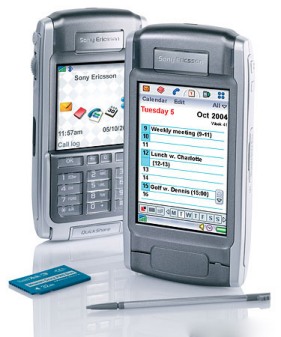


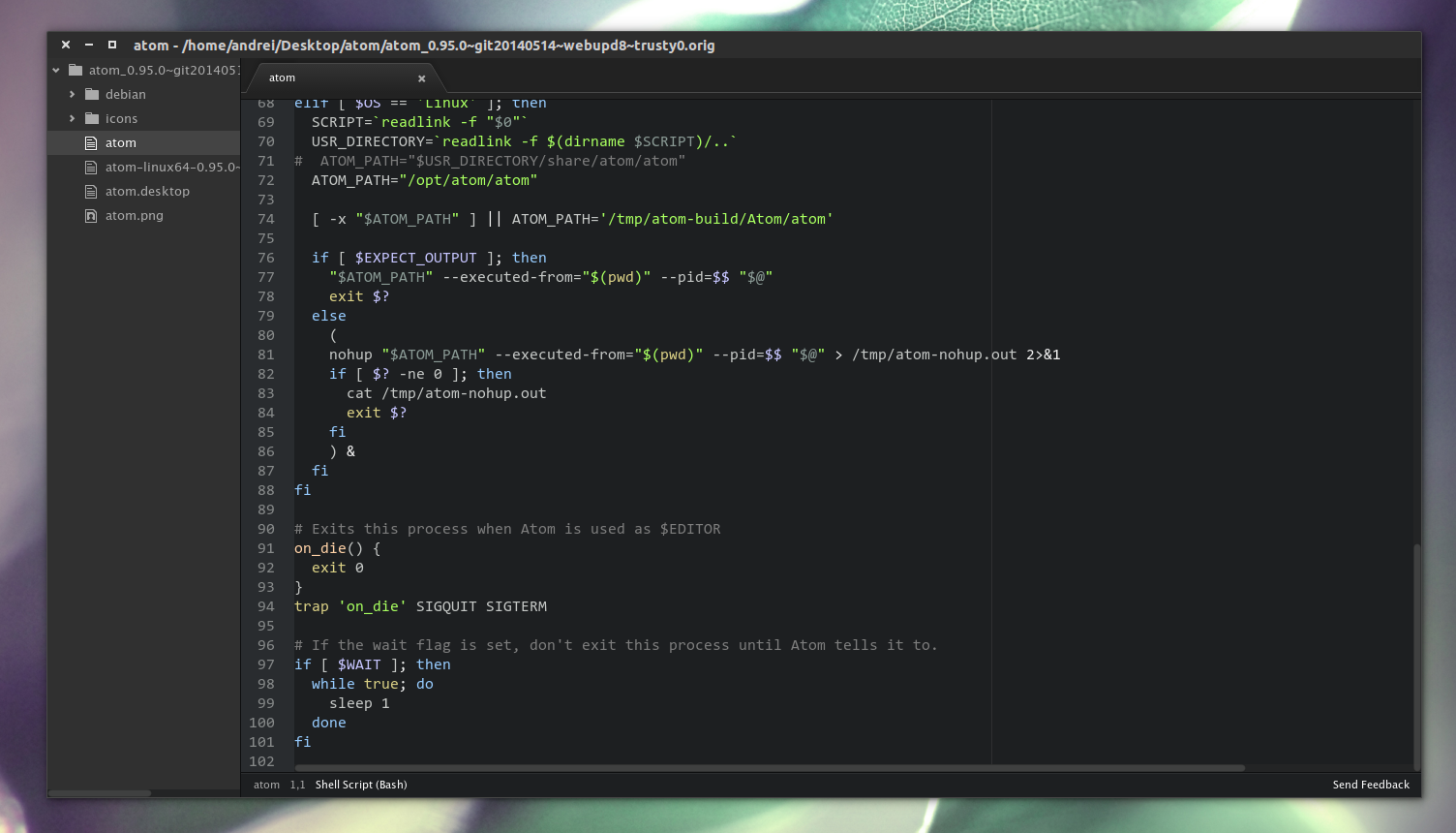
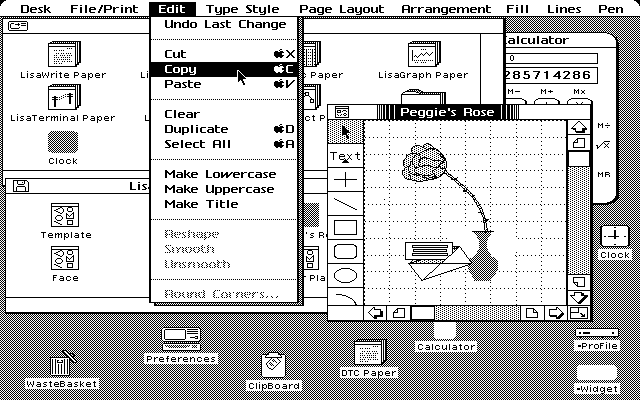
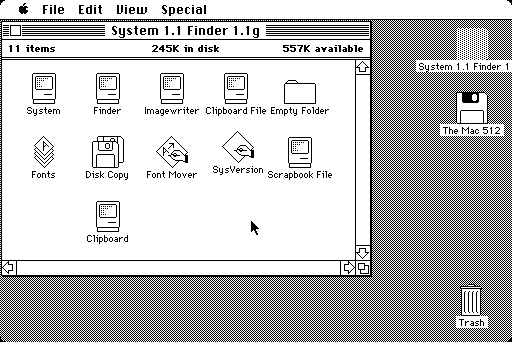


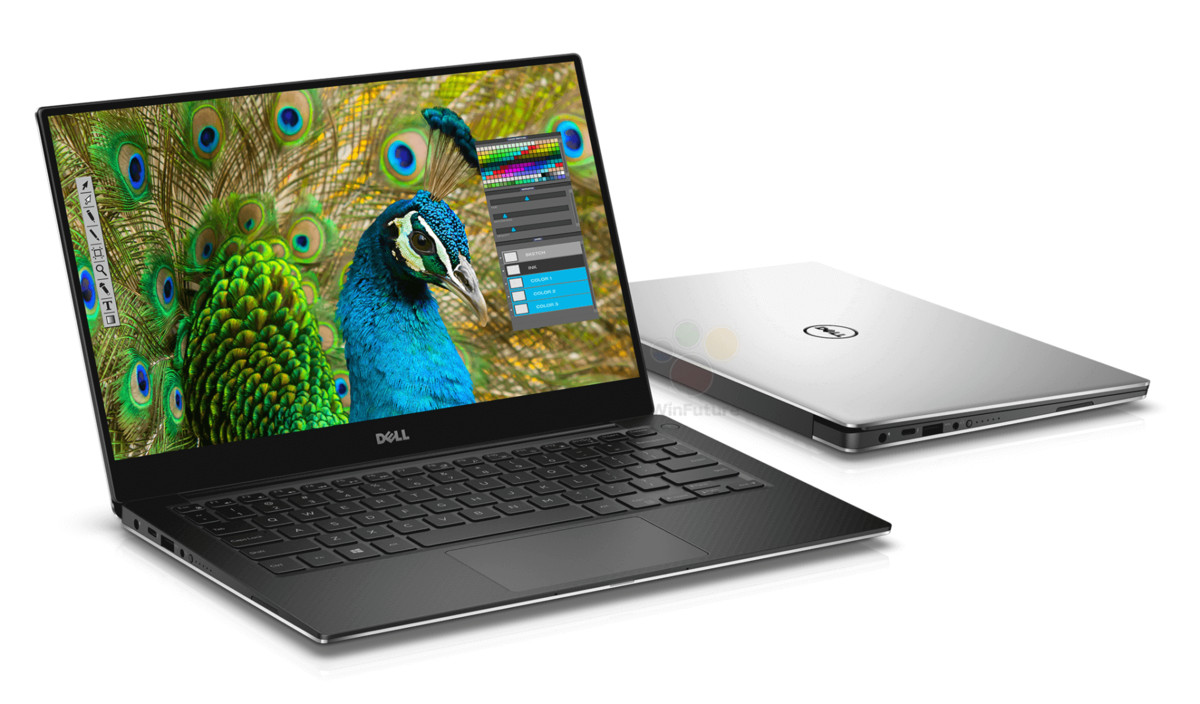
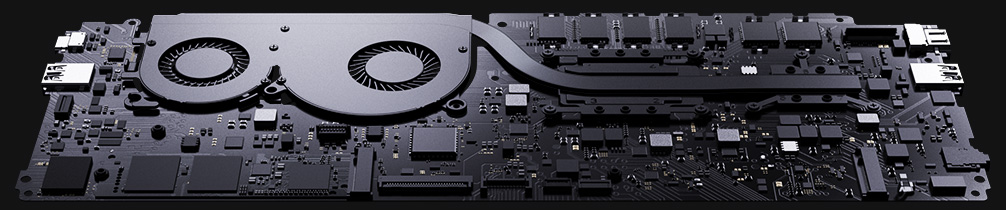

[1] http://arstechnica.com/gadgets/2016/07/motorola-confirms-tha...