Can someone enlighten me with some information about application requiring the full 16x PCIe gen4 bandwidth per slot (or 32x gen3 for that matter)? I can imagine some HPC GPU solutions but other than that what requires the thoughput?
There is obviously a market for this as both giants are building platforms.
It is not just about throughput, it is about the flexibility of how you can use the lanes.
Working with desktop computers I've often been frustrated by the limitations of PCIe lanes on Intel processors which are exacerbated by limitations of the motherboards. Frequently I find that "I can't get from here to there" when I am adding cards because the machine has an i5 processor or that particular motherboard, or... Often I can turn off some features on the motherboard i don't need to free up some lanes or shuffle the cards around, but it reminds me of the bad old days when I had to set jumpers for the interrupts on all the cards.
There are numerous holes in the hardware industry that have been caused by Intel's stinginess on I/O. You don't feel the pain on laptops or the tablets and cell phones that Intel had vainglorious ambitions for, but it's been one less reason for people to build machines for which Intel could wipe the floor of their competitors.
It's also been a big aid to IBM's Power architecture because one of the few things keeping that alive is better I/O.
Remember that these EPYC systems will have up to 64 cores per chip. 128 cores / 256 threads per 2P platform, with 128x to 160x PCIe 4.0 lanes depending on the motherboard.
Lets say you split up your system into 32 VMs (4-cores / 8-threads per VM). That's only 4x to 6x PCIe 4.0 lanes per VM. Doesn't seem very spacious anymore, does it? That's barely enough room for a NVMe drive per VM + a small, shared chunk of graphics (modern enterprise GPUs can be virtualized and split between VMs. So one x16 link to a beefy GPU can be shared between 8 VMs)
If your current customer is using NVMe drives + thick-client workstations for docker / testing / etc. etc, it may be difficult to convince them to switch to a virtualized infrastructure. But a beefy machine with this much I/O would definitely catch their eyes.
This, exactly. These chips are targeted for the heavy virtualization platforms (see: "The Cloud"). It means you can fit more customers in the same space and power envelope before you start running into noisy neighbor issues.
Not an expert, but at least on the gaming side of GPUs my understanding is that you usually aren't using the bandwidth much. For rendering your average frame, all the data you need is already in VRAM.
But if there's new model or textures that aren't yet on the GPU, you want to move them over quickly because the next frame needs to go out ASAP. For a game running at 60hz you've got 16ms to avoid a frame delay. At 144hz you have 7ms. So it can be helpful to be able to dump stuff to VRAM very quickly, which the GPU can grab from system memory via DMA at very high speeds.
For most model/texture loading you know an object is coming into the scene and would have put it on the GPU ahead of time, so this a sort of worst case scenario shouldn't really come up unless you have a huge number of possible things that could spawn in and you don't know which until the last minute. Pretty unlikely.
For the biggest transfers, like loading in an entire level worth of assets, you can hide it with loading screens, or load low resolution textures to start with and stream in the high resolution versions to catch up. Having more PCIe bandwidth will help speed that up if it's in system RAM, but if you're loading it all from disk that's going to be your limiting factor.
I saw some benchmarks years ago where running a high end GPU at x8 or even x4 had pretty minimal impact. With high res textures coming in for 4K now I'd be curious to see someone run that again.
Realistically, I don't think gamers should care about it beyond the spec one-upmanship. HPC would get a lot more use out of it. Maybe also a shift toward fast PCIe based storage solutions like Intel's Optane?
> I saw some benchmarks years ago where running a high end GPU at x8 or even x4 had pretty minimal impact. With high res textures coming in for 4K now I'd be curious to see someone run that again.
The average impact is low, but frametime consistency is generally deteriorated much more strongly than the small reduction (0-5 %) of average FPS suggests. That is probably mostly due to blocking uploads, where having a multitude more bandwidth reduces the blocking time. The average reduction is probably more caused by the general area of latency, since modern renderers tend to do a bunch of queries and while they obviously try to avoid it they'll have some amount of blocking commands in each frame frame.
A dual 100GbE NIC requires a PCIe Gen4 x16 slot to run both ports at full speed. Mellanox ConnectX-6 200GbE cards require either 2x Gen4 or 1x Gen5 slot for full dual port bandwidth. Most of the larger NVMEoF nodes we are seeing are using more than one 100GbE NIC.
Enterprise SSDs will rapidly fill Gen4 x4 lanes later this year as we start to see them launch alongside more mainstream platforms. Four of those will fill a x16 slot.
GPUs and PCIe switches are also great examples of uses.
You are right that for the high-volume server segment, 160 PCIe lanes are overkill, as is even 128 today frankly. For some context, there is a huge portion of servers sold with less than 1 DIMM per RAM channel installed.
Before we had M2/U2 NVMe drives, there were quite a few manufacturers making drives that plug straight into the PCIe bus where they could easily access the full 16 lanes, and they still can...
Intel seems to be the only ones making PCIe drives (Octane's are funny; they don't look fast only 2000 MB/s, although they do win on latency and random access). Anyway, there doesn't seem to be much demand for that speed, I guess it's a case that x4 U2/M2 are good enough.
Speaking of which.. I'm am surprised there isn't a similar network interface utilising PCIe with a low overhead protocol the same as NVMe does. Getting towards the point where a small number of machines could share memory and CPU's between machines. I know we have Infiniband but that has always come at quite a cost, mainly in supercomputers.
There are still a decent number of x8 AIC SSDs on the market but enterprises don't want them because they're not hot swap.
Networking over PCIe exists but no one seems to care about it. https://semiaccurate.com/2014/09/23/look-avagos-expressfabri... Part of the problem may be that 96x8G PCIe switches look pretty small compared to 256x50G Ethernet switches and thus you'd need a lot more of them.
NVMeOF (NVMe Over Fabrics) comes to mind, having multiple NVMe drives (mostly PCIe x4) + networking (100GbE uses x16 PCIe) consumes a lot of PCIe lanes.
Also note that current two-socket AMD Epyc servers use 64 lanes from each CPU for inter-CPU communication, so the entire server has only 128 lanes (out of 256) left for peripherals.
Yeah but realistically NVMe will remain on 4x and you'll get faster drives. It allows for double the number of ports in NICs though, which is really useful for 10+Gb (and especially 100)
High performance networking on the whole, of which HPC GPU solutions are only one use case. And there's the continuing trend of sticking offload engines in the form of ARM ASICs alongside devices that connect over PCIe.
GPU training of ML/DL models is bottlenecked in bizarre locations. Generally when doing distributed training on multiple GPUs with a large dataset you move all at once enough data to fill the GPU RAM during training and let it crunch for a little while, then push the next batch in. People have come up with workarounds like doing multiple training passes over each batch of data, but ideally you would not do that and would refresh the whole 12/16GB of training data on each pass. If you have enough RAM on the board to keep the whole training dataset in memory (likely) then you can easily find that the bottleneck in your system is bandwidth to the GPU. People like to be able to train with a large number of GPUs in parallel, but they really don't like cutting down to 8x PCIe lanes/GPU.
This will give us servers for deep learning that can have 8 GPUs and a couple of NVMe disks on PCI 4.0 (32 GB/s). With very good inter-GPU I/O and access to NVMe, it will enable commodity servers that are competitive with Nvidia's DGX-1 or DGX2, that include SXM2 (Nvlink with 80GB/s between GPUs).
Yeah, that's why most PCIe M2 top out at around 3500 MB/s, I doubt it will take long to saturate 7 GB/s (or double that in RAID0). Either way, it's a heck of a lot of bandwidth!
While NVMe drives are becoming quite common in regular computers, sadly most software is ill-equipped to handle that sort of I/O bandwidth well. (I would blame OS interfaces for at least three fifths of that, though people who think using textual formats where the most fastest, least correctest parsers top out at 1.5-2 GB/s for bulk data also have their share of blame).
Sadly, the extra bandwidth will come in handy as software developers become evermore slack.
I do agree about parsing text (like json!). It seems crazy to stick to text formats/ protocols when binary would be much faster (it's easy to convert binary to text for debugging purposes, as that's what happens anyway!), we're still not fully utilising http2. (Don't quote me) but I remember hearing somewhere that -10% of computer resources are spent converting between base10 and base2. Have a read of DotNet's Span (reference structs), by not copying values everywhere (and the relieving subsequent GC pressure) it's improved tasks like parsing text by an order of magnitude (often more) - That's something the compiler will be able to do without the developer's effort.
Software moves "slower" because hardware needs to exist 1st and needs to see a widespread adoption in order to justify the cost of development and continuous improvement, also only hardware companies have the expertise because, well, they are the ones who developed the thing.
Doing software actually costs a lot, and no one wants to spend that kind of money past the "good-enough" threshold if they don't have to.
Software then moves a lot slower, because most user applications are pretty bad at using more than one core efficiently; and these CPUs have been mainstream for some 15 years now.
The hardware is certainly much more capable than what little use the software tends to make of it.
Off the top of my head this would be great for massive enterprise VDI installations and game streaming services (which is just VDI by another name), ML, AI applications, and NVMe storage.
Personally, this will be good for me because everything I do is bandwidth-starved.
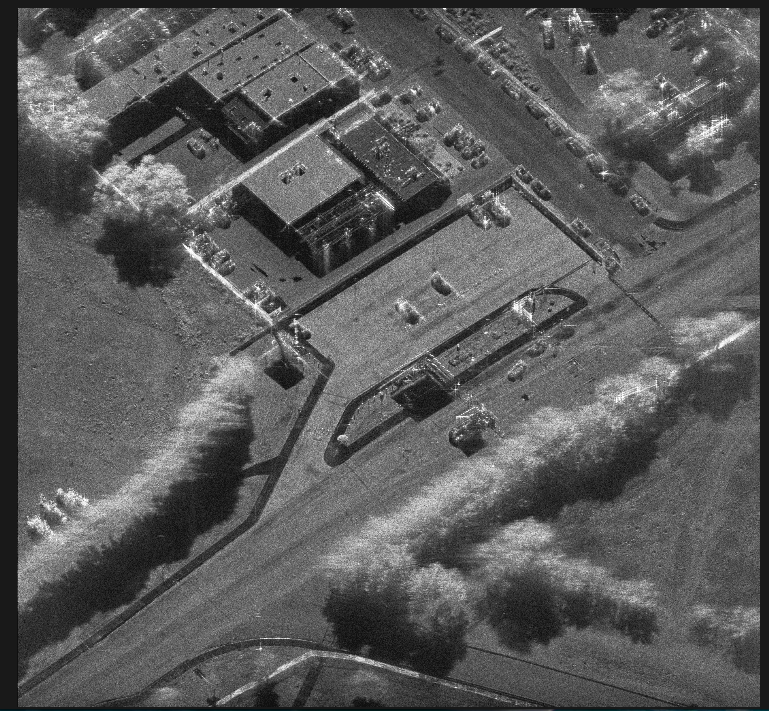
I'm not a radar scientist but I am a systems engineer supporting radar scientists working on air- and space-based Synthetic Aperture Radar (SAR) systems. We use GPUs, FPGAs, and other accelerators to generate images from SAR data.
In 2002, it took more than 24 hours to generate a single low-resolution picture from low-bandwidth SAR data on a $1.5 million Sunfire 15K cluster with 70-ish SPARC CPUs. Today, on a single 3U server with two Xeons and four Tesla V100s it takes about 15 seconds-- and that's an extremely high resolution image from very high data rate SAR data.
But our goal is real-time VIDEO from SAR data, so everything needs to be faster. Network speeds need to be faster, CPUs need to be faster, GPUs need to be faster and we need more of them, storage needs to be faster, everything needs to be faster.
I could see a 3/4U box with 16+ 16x PCIe slots each stuffed with a 1-slot GPU with an NVMe (4x PCIe lanes each!) storage array and a couple of 100GBe dual-port NICs blasting through SAR data like a hungry hungry hippo.
As far as PCIe lanes go, if I have a 24-drive NVMe array that's 96 PCIe lanes all by itself.
I've never heard of "SAR", that's very interesting... But I am curious, if the data truly comes from only radar, why are shadows apparent in many of the created images? Or does the same surface reflect radio waves differently based on whether it is in the sun or not?
Radar sends pulse. Radar moves. Radar looks at reflections from previous pulse. Because radar moved before waves returned and is now looking at the area from a different angle making the image appear illuminated from elsewhere. Its not the suns shadow but a radar shadow. Like if you took a picture with a flash and managed to reposition your camera to a different angle before the light from your flash reached the target.
A bit off topic, but where can I find details of the math behind SAR? In my last job I worked on radar systems and I was always curious about SAR. However all the information I found was high level descriptions. There was even some MIT course available on it but they too skipped/avoided the math involved
(Im curious to see if I can apply similar techniques to audio)
Just remembering a friend recently telling me about someone who was killed at a work place. Apparently that person walked in front of the main radar array (defense related I think) while it was in operation and just dropped dead instantly. :(
At the 1933 World’s Fair in Chicago, Westinghouse demonstrated a 10-kilowatt shortwave radio transmitter that cooked steaks and potatoes between two metal plates [1]. In 1946 a Raytheon engineer named Robert Spencer "...was visiting a lab where magnetrons, the power tubes of radar sets, were being tested. Suddenly, he felt a peanut bar start to cook in his pocket. Other scientists had noticed this phenomenon, but Spencer itched to know more about it. He sent a boy out for a package of popcorn. When he held it near a magnetron, popcorn exploded all over the lab. Next morning he brought in a kettle, cut a hole in the side and put an uncooked egg (in its shell) into the pot. Then he moved a magnetron against the hole and turned on the juice. A sceptical engineer peeked over the top of the pot just in time to catch a face-full of cooked egg. The reason? The yolk cooked faster than the outside, causing the egg to burst..." [2]. This discovery led to a patent application for "the use of microwaves to heat food", a concept which was eventually realised in the "Raytheon RadaRange" series of microwave ovens [3].
Given the Inverse-square law, your phone and wifi network will probably give you more radiation..
I had some bones scans (plus a couple of CTs the same day, just a bit more ionising radiation) last year. They inject you with Technician 99m and YOU become the gamma/ x-ray source. It's a little concerning when you see the detail and spread of the radiation. If it wasn't a pure Gamma source (and 6hour half-life) it would be lethal!
I forget if it was 70,000 milli or microsieverts (think it was milli? 0.5% increased risk of cancer in my lifetime). Oh, and my bladder looked like a lightbulb.




There is obviously a market for this as both giants are building platforms.